
The Sudoku Professor's
Complete Doctorate Level Solving System
"THE BEST HIGH-LEVEL SUDOKU COURSE EVER!"

Get the Complete Doctorate Level Course!
Check Out the Details Below...
See More Patterns!

New! 2 Corners Technique!
The more we learn, the fewer corners we need to solve those nasty puzzles.

Get Unstuck!
Solve Tough Puzzles Faster by Knowing What to Work With and What to Avoid

Powerful Techniques!

Further Your Training!
All the techniques you need to solve puzzles that up until now you have given up on!

Special Bonuses!
Get Extra Puzzles, Walk-through videos, and more!
Here's What the Doctorate Solving System Covers . . .

Chains Series
- I’ll bridge the gap between what you already know and what you will be learning in this module
- You’ll learn the basic components of chains
- You’ll see that you’ve already been doing simple, short chains for quite a while
- You’ll learn the notation that’s absolutely essential to success with this technique.

Swordfish Series
- You’ll learn how the Swordfish pattern is just Cloaked 4 Corners on Steroids.
- You’ll see the difference between Proof Logic and Execution Logic
- We’ll break down the Swordfish technique from every angle showing you how to find it.
- You’ll learn how to narrow down candidate numbers, so that you’re dealing with the smallest possible set of number to search on.
- We’ll cover the “Jellyfish” technique, which is really just a slightly more complex Swordfish.

The 2-Corners Series
- You’ll learn that the 2-Corners is a disjoint double-double with a “control space” helper.
- We’ll break down the 2-Corners technique into four digestible elimination patters.
- You’ll learn the sure-fire to find all potential 2-Corners patterns on the puzzle.
- You’ll see how the 2-Corners eliminate all of a number in a row, columns or box, and, since that elimination really shouldn’t happen, what you need to do next to find the fast solution.

Conflict and Coalesce Series
- I’m going to talk about really hard puzzles that can be solve with logic versus those that require guessing
- You’ll see how we step into the future to find information to bring back and use in the present
- I’ll show you how these two techniques replace all those hard to understand and confusing techniques out there (XYZ-Wing, Swordfish, Jellyfish, etc., etc.)
- You’ll understand the types of conflicts you can encounter in the Conflict technique I’m about to show you.

C&C Shortcut Technique Series
- I provide the background of how I developed these shortcuts to the Conflict & Coalesce techniques. I also introduce the terms “Target” and “Trigger“, which will become an integral part of your vocabulary when using these techniques.
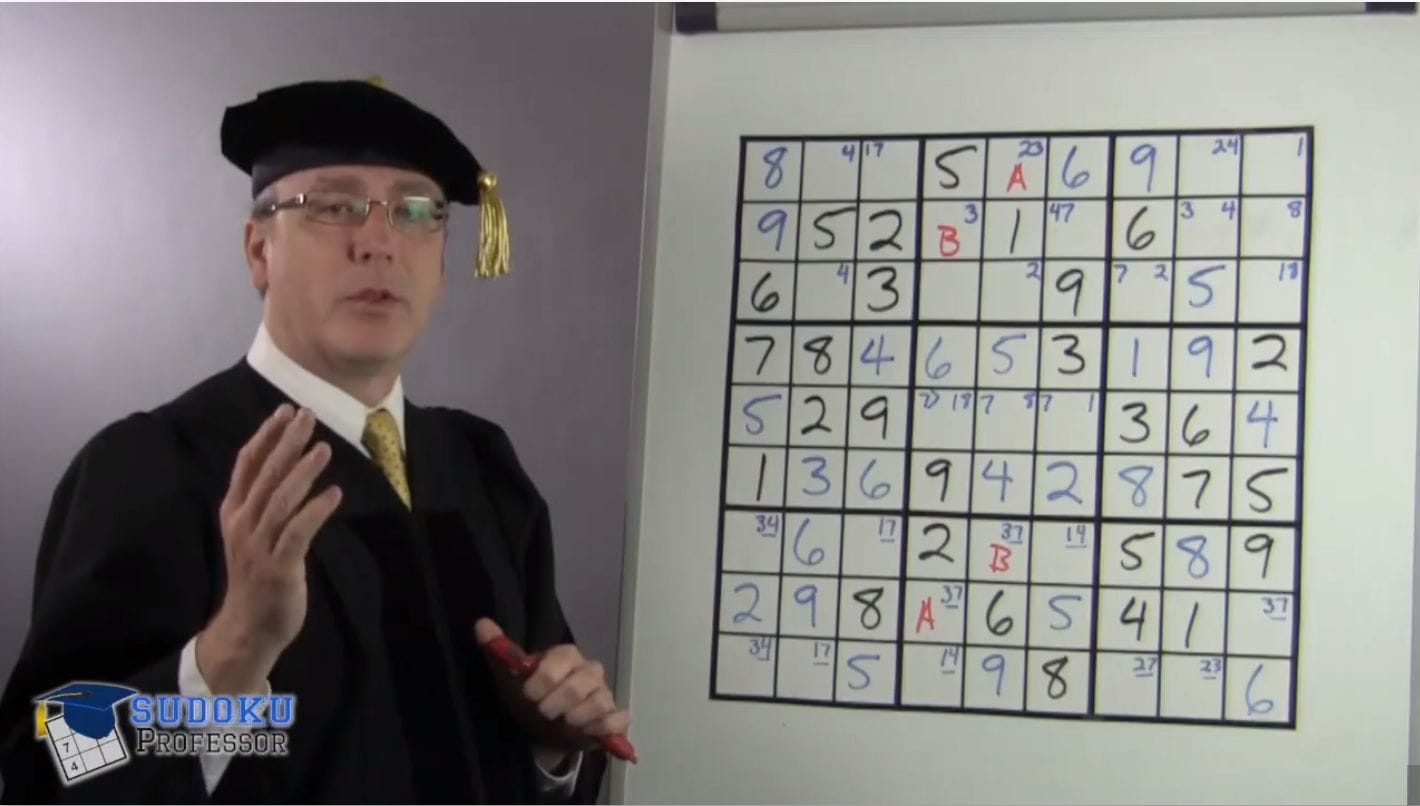
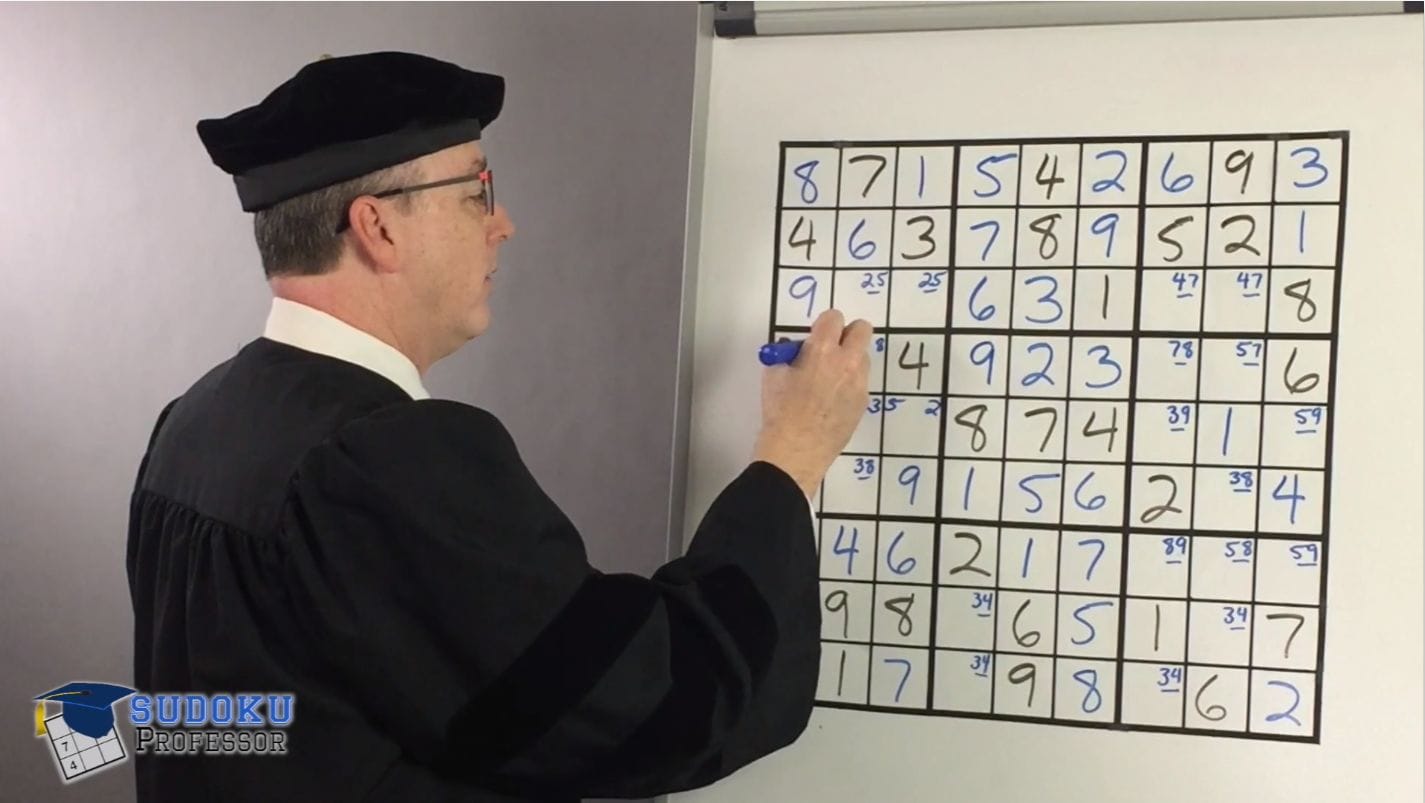
Start Learning Today!


Doctorate 601: Short Chains
- How to find short chains using the new chain notations. How some chains yield no new info, and how other cells looks like they form a chain when they really don't.

Doctorate 602: Exhaustive Search Method
- How to find medium-length chains using the exhaustive search method. How to make sure you don't miss something important.

Doctorate 603: BEECh Method
- The BEECh Method is the most effective way to find chains. Created by Brian Garman, this method turns the Chain search process around to enable you to find Chains without groping around in the dark.

Doctorate 604: Using In-line Double-Doubles
- As we continue to employ the BEECh method, you'll learn how you can't ignore in-line double-doubles as starting points for chains and how they limit where you will find an elimination cell.

Doctorate 605: Using Disjoint Double-Doubles
- It turns out that Disjoint Double-Doubles can often form the beginning and ending cells for a Chain. You'll see that in action as we combine the DJDD search with the BEECh method.

Doctorate 606: Linking Triple-Doubles and Double-Doubles
- You already know how to link double-doubles with each other. If we can link triple-doubles with double doubles, we are doing the same thing, we just end up with a slightly longer chain.

Doctorate 607: Long Chains
- When you form longer, more complicated Chain, it gets really hard to keep up with where the Chain is located and the path it takes. If you can't keep up with the chain, mistakes happen. Here you'll learn two easy ways to help you keep track of your chain, so you can follow it around the board and double-check your work.

Doctorate 608: Sub-Chains
- When you form a long chain that gives you no good result (i.e., a "chain to nowhere"), you should search that chain for sub-chains that may give you a valuable elimination. You've done a lot of work to find a long chain (e.g. 7 links or longer). Don't let it go to waste!

Doctorate 609: Special Topics
- There are some very interesting situations that you can run into with Chains. We discuss that here with Guest Lecturer Brian Garman on the topics of Loops and Circuits.
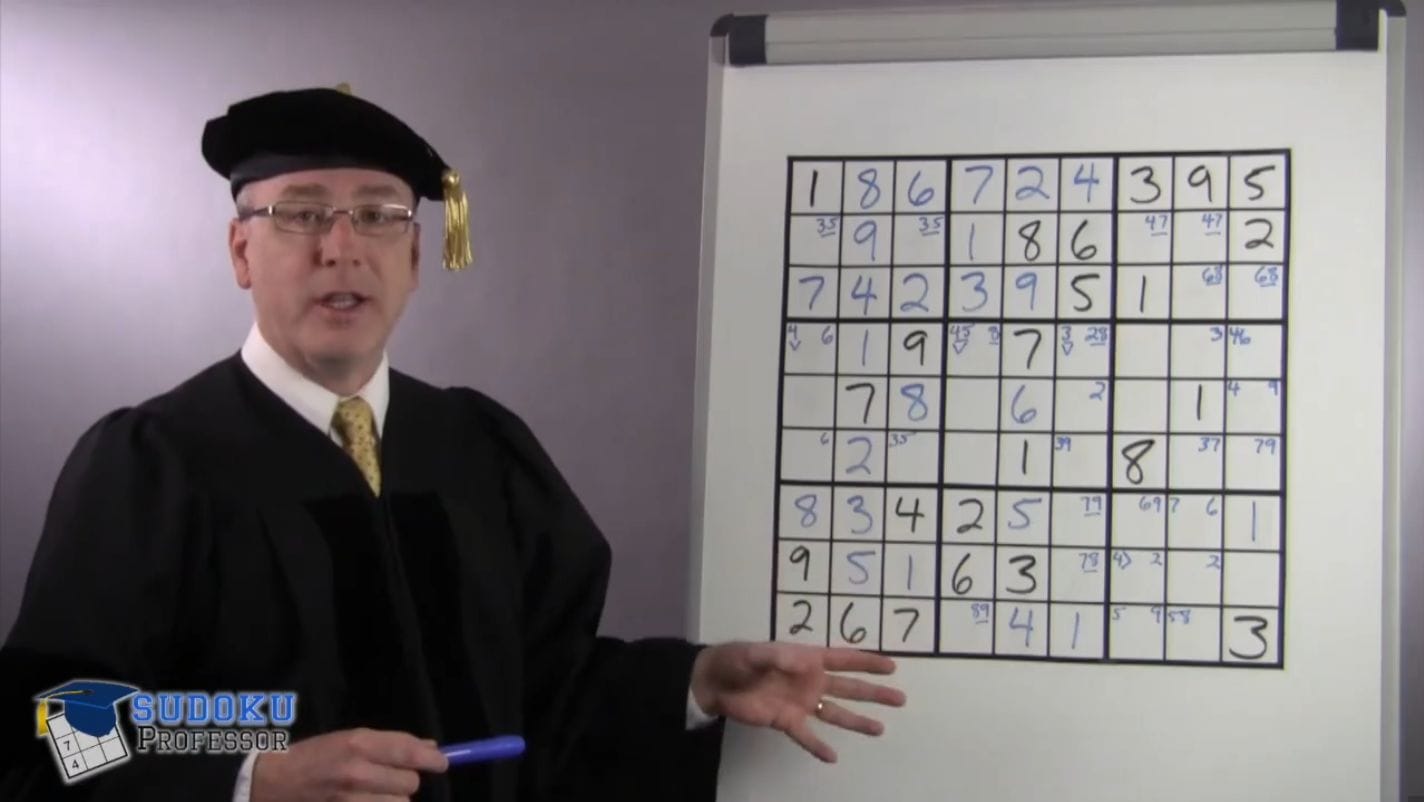
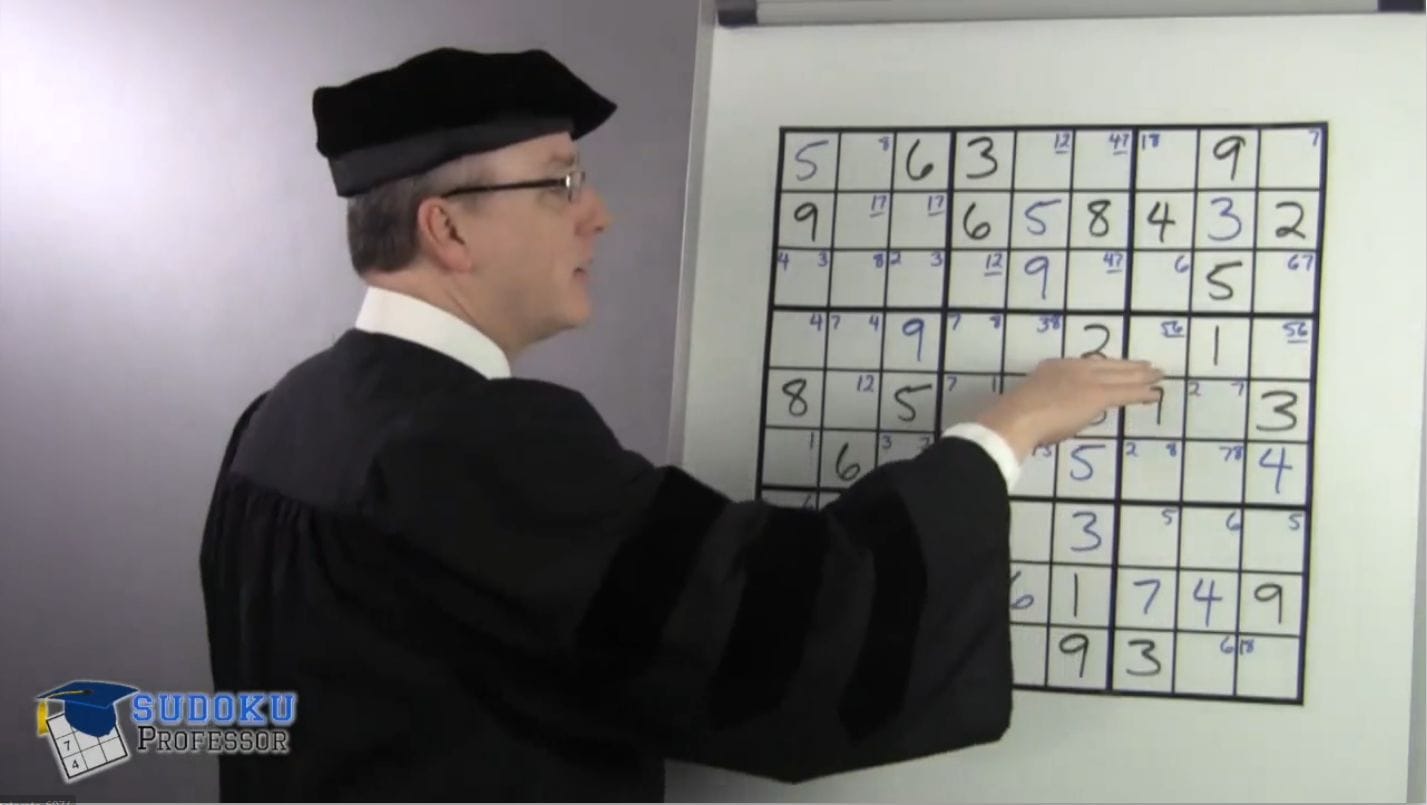
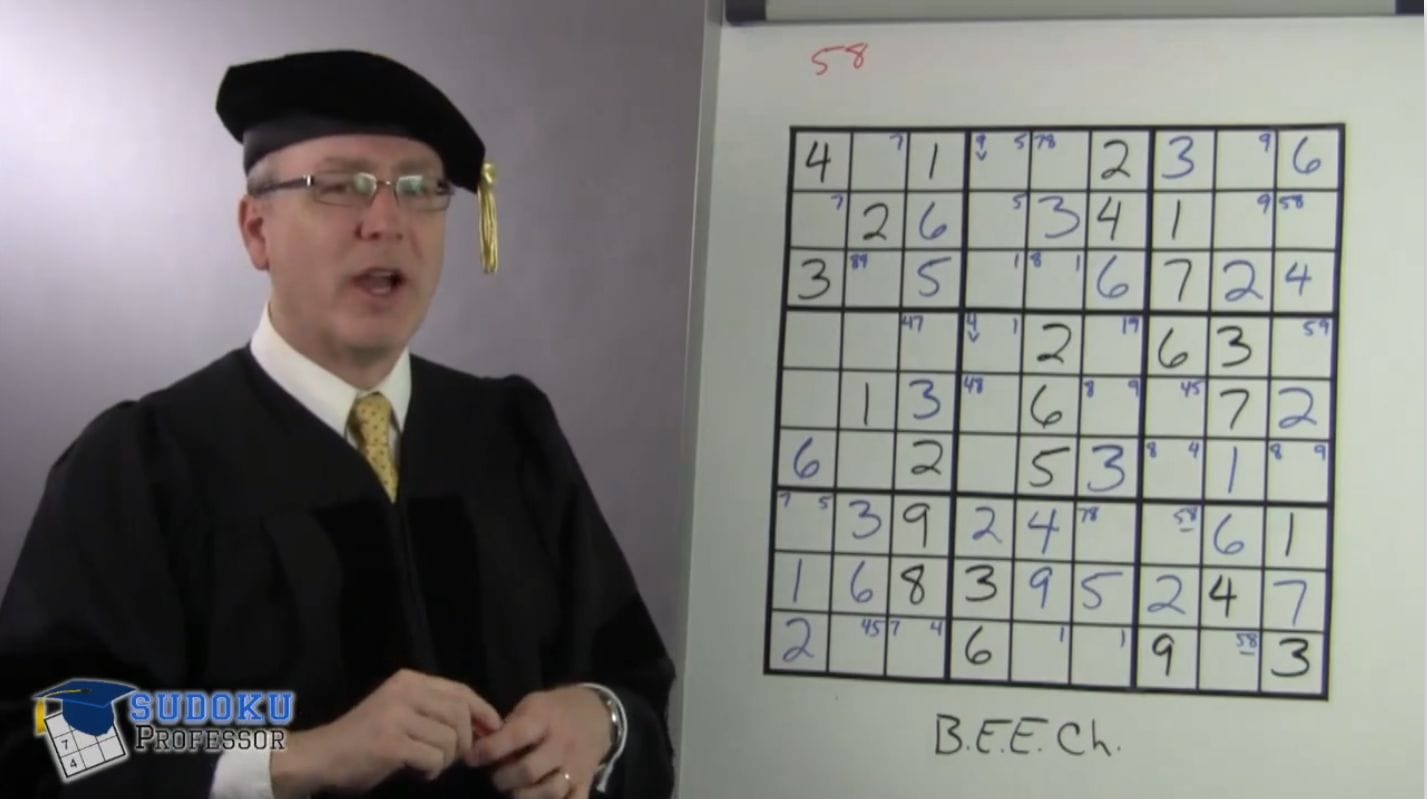
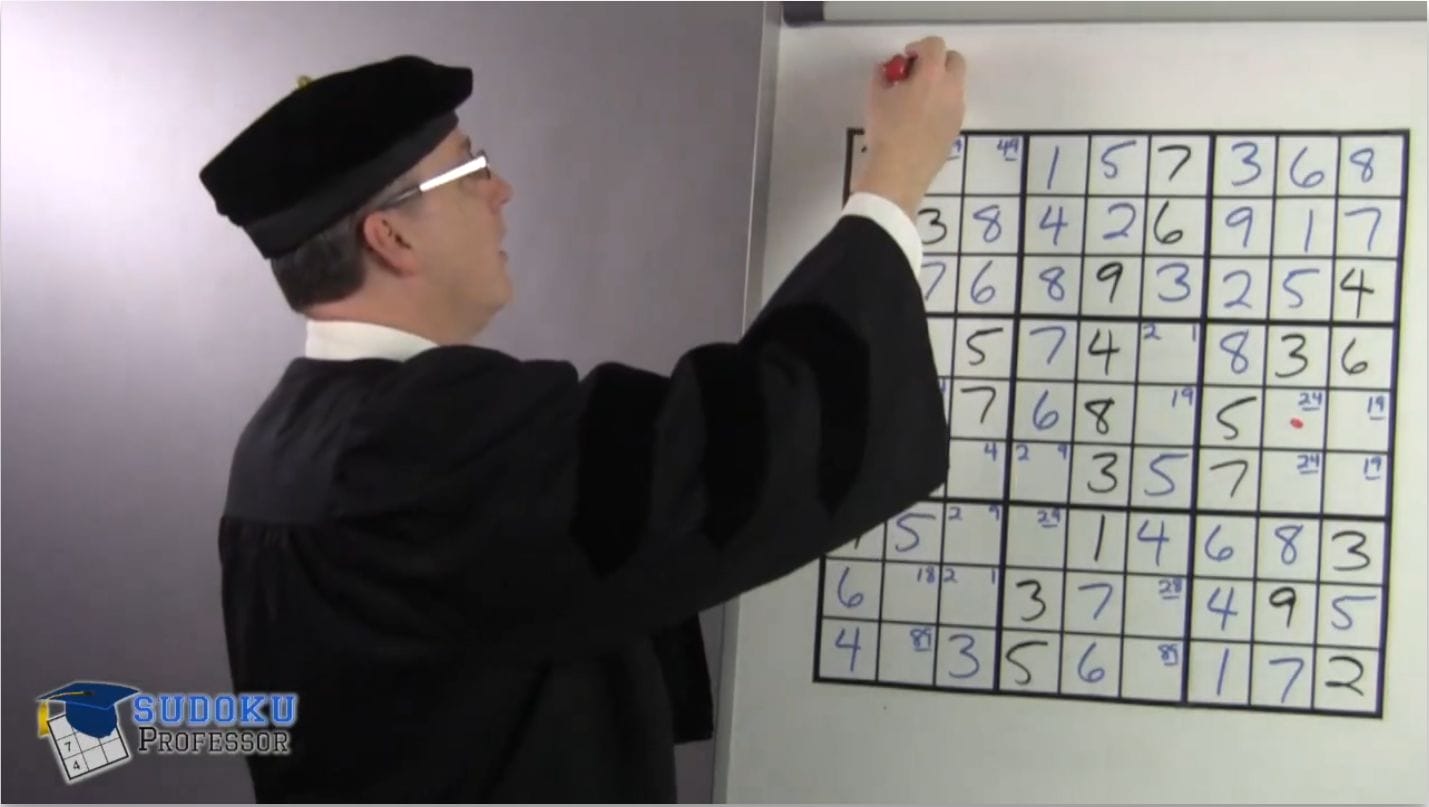
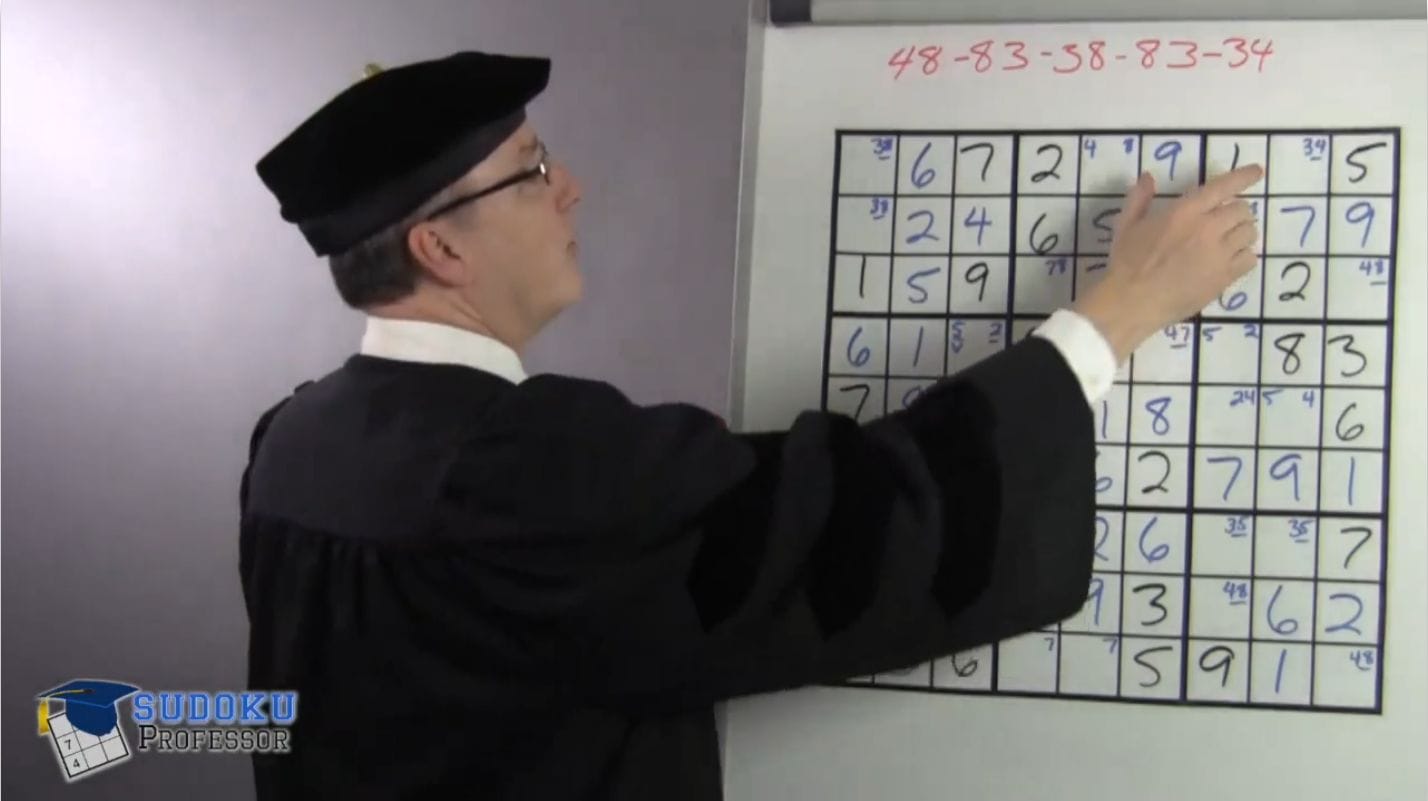
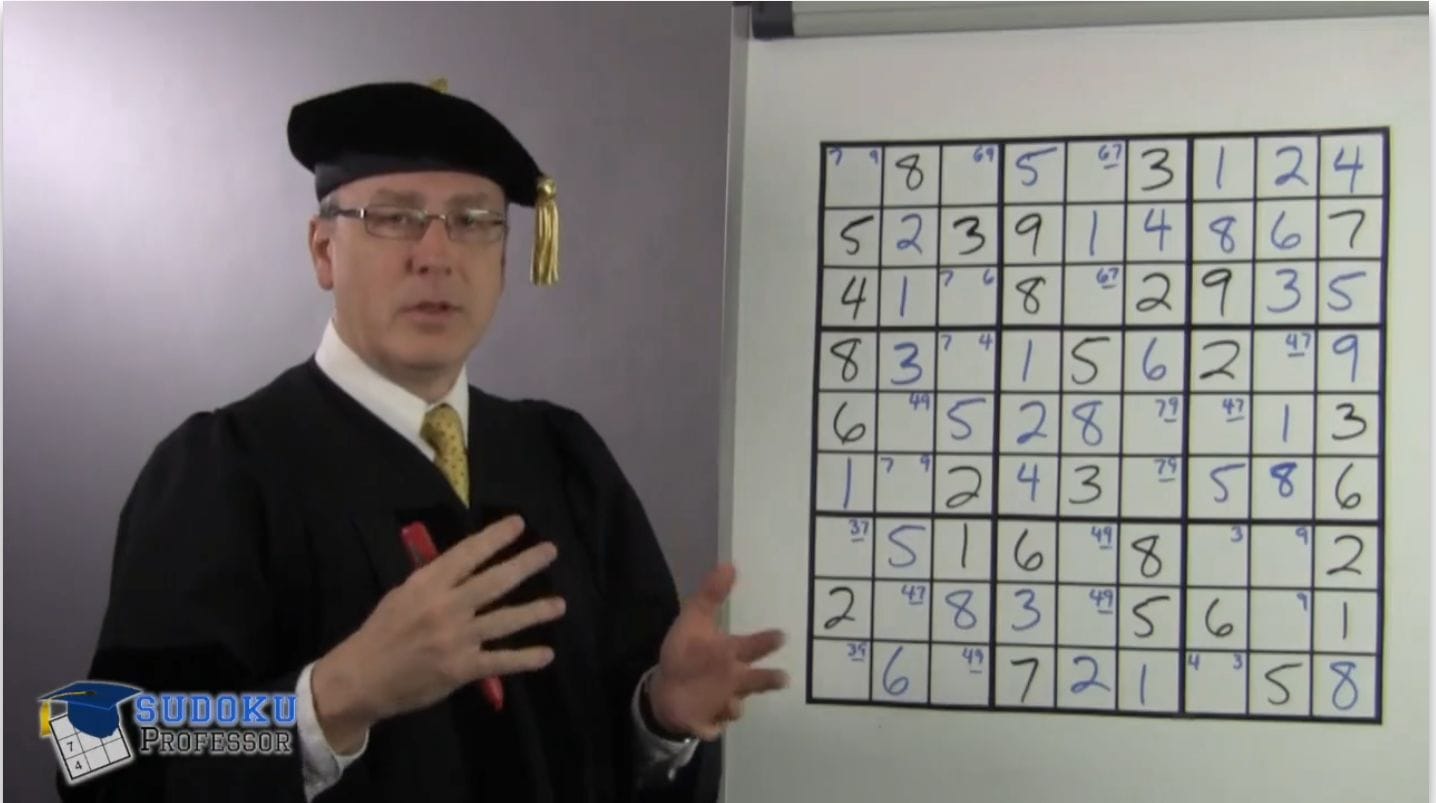
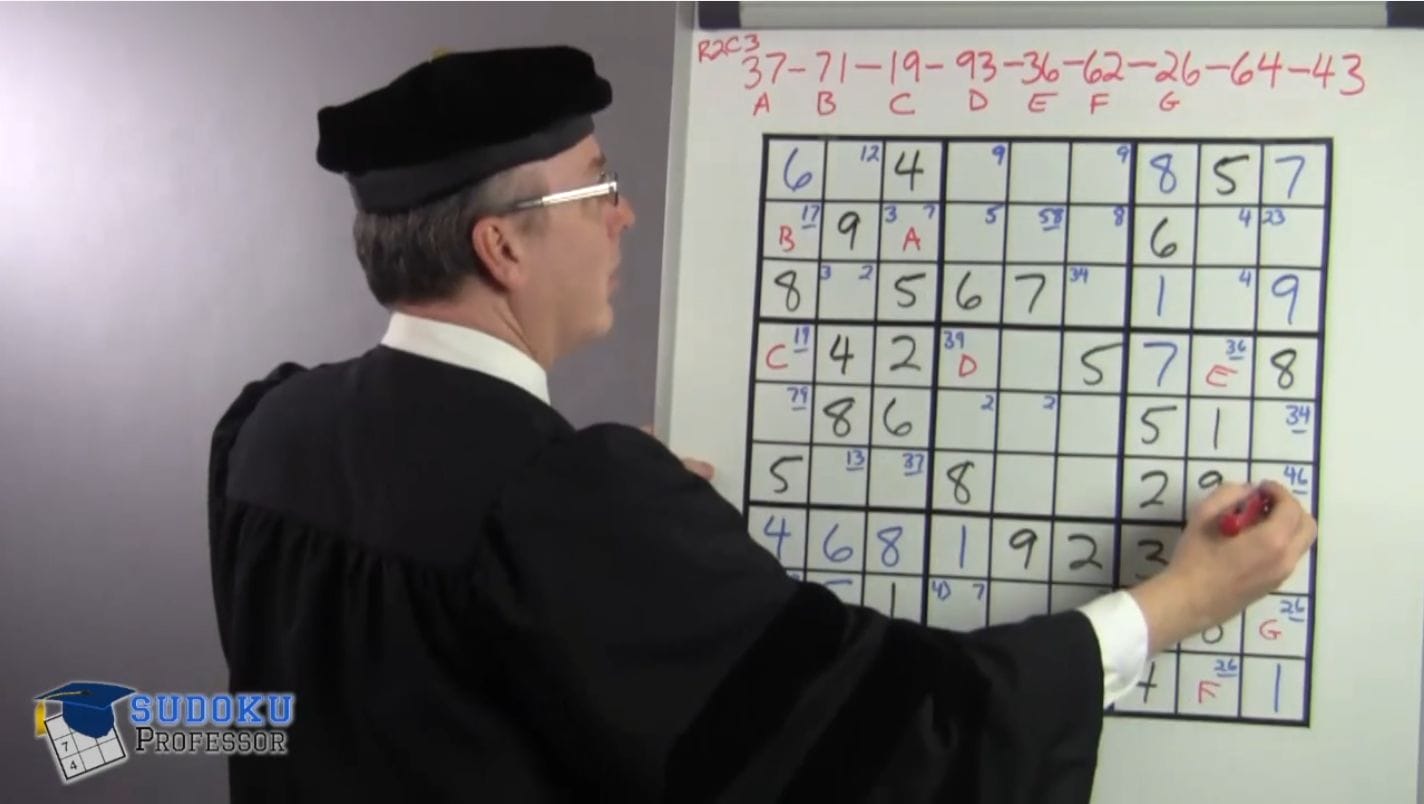
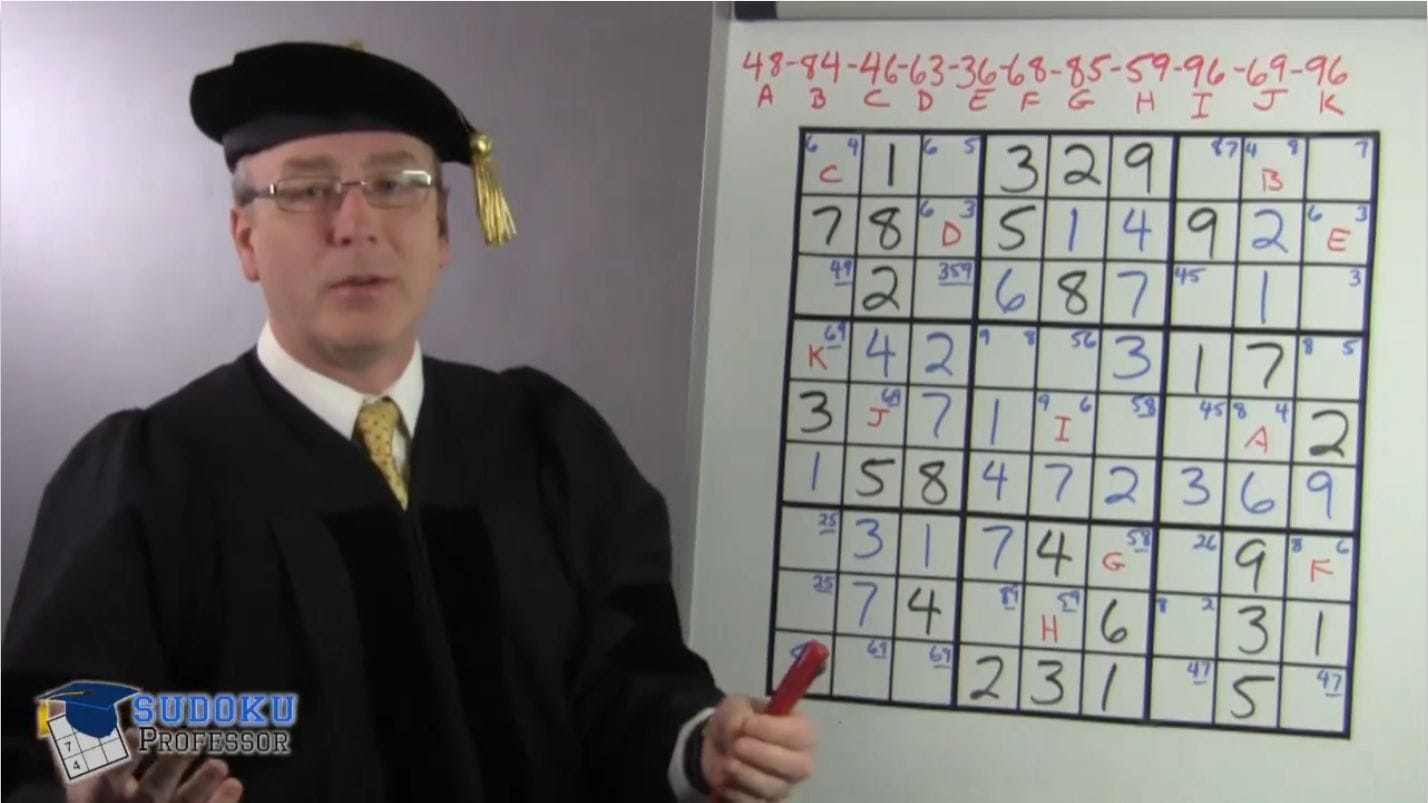
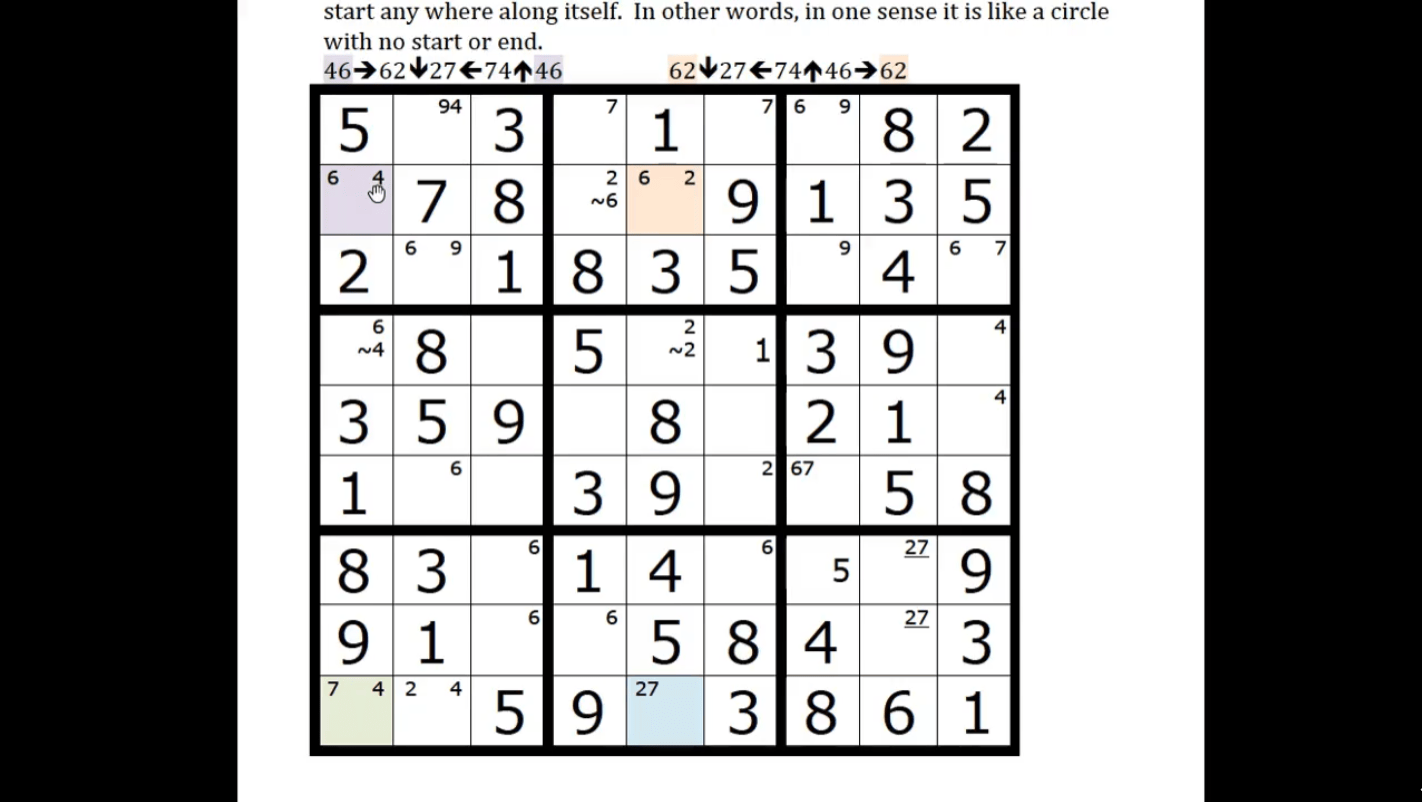

Plus! Nine Doctorate 600 Series Lesson Puzzles
- Download, print, and solve!
- Easy-to-read big numbers!
- Follow along with the Professor and see results!
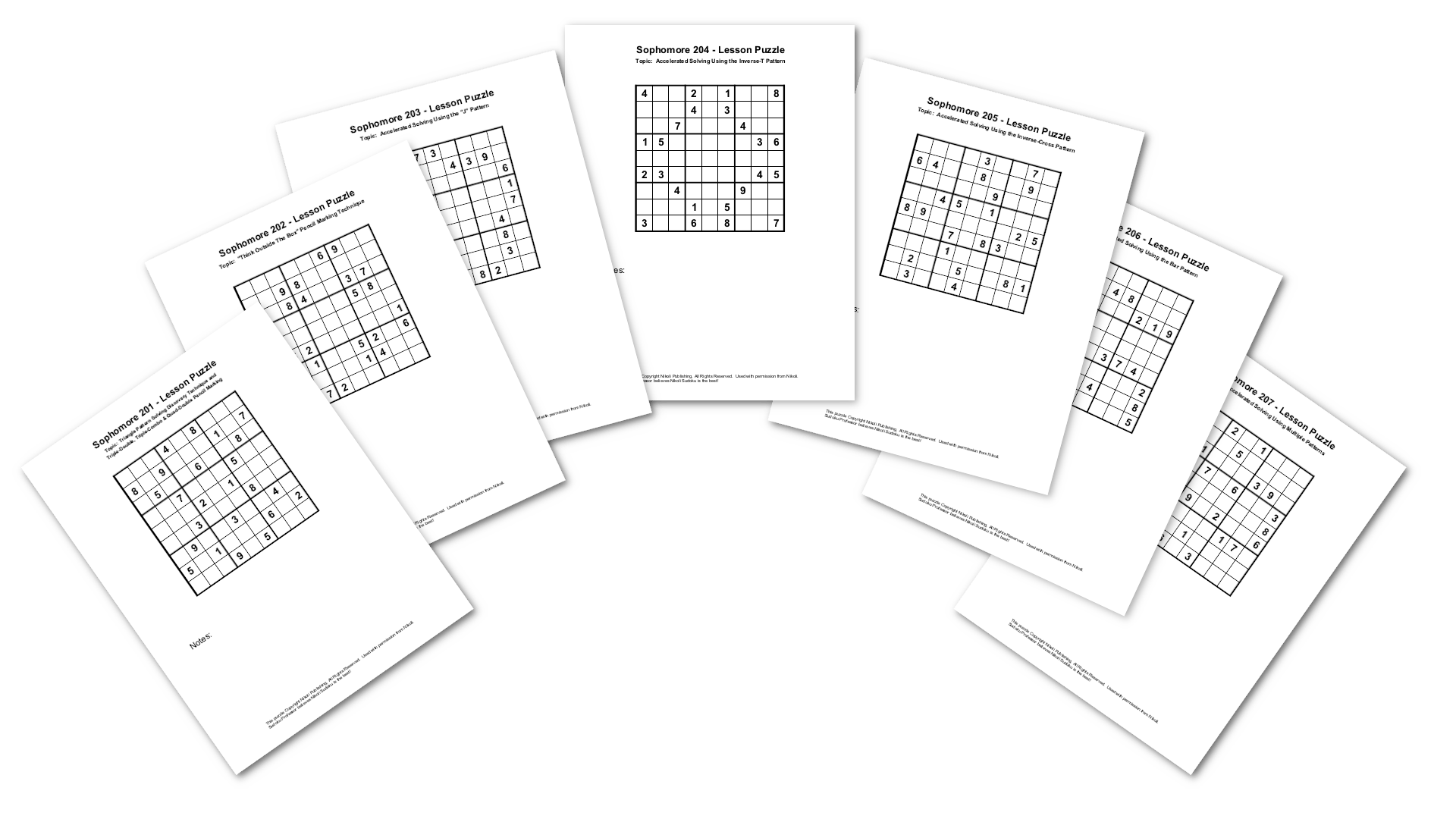
Get Immediate On-Line Access to the Full Course!
Discover New, More Powerful Techniques in the
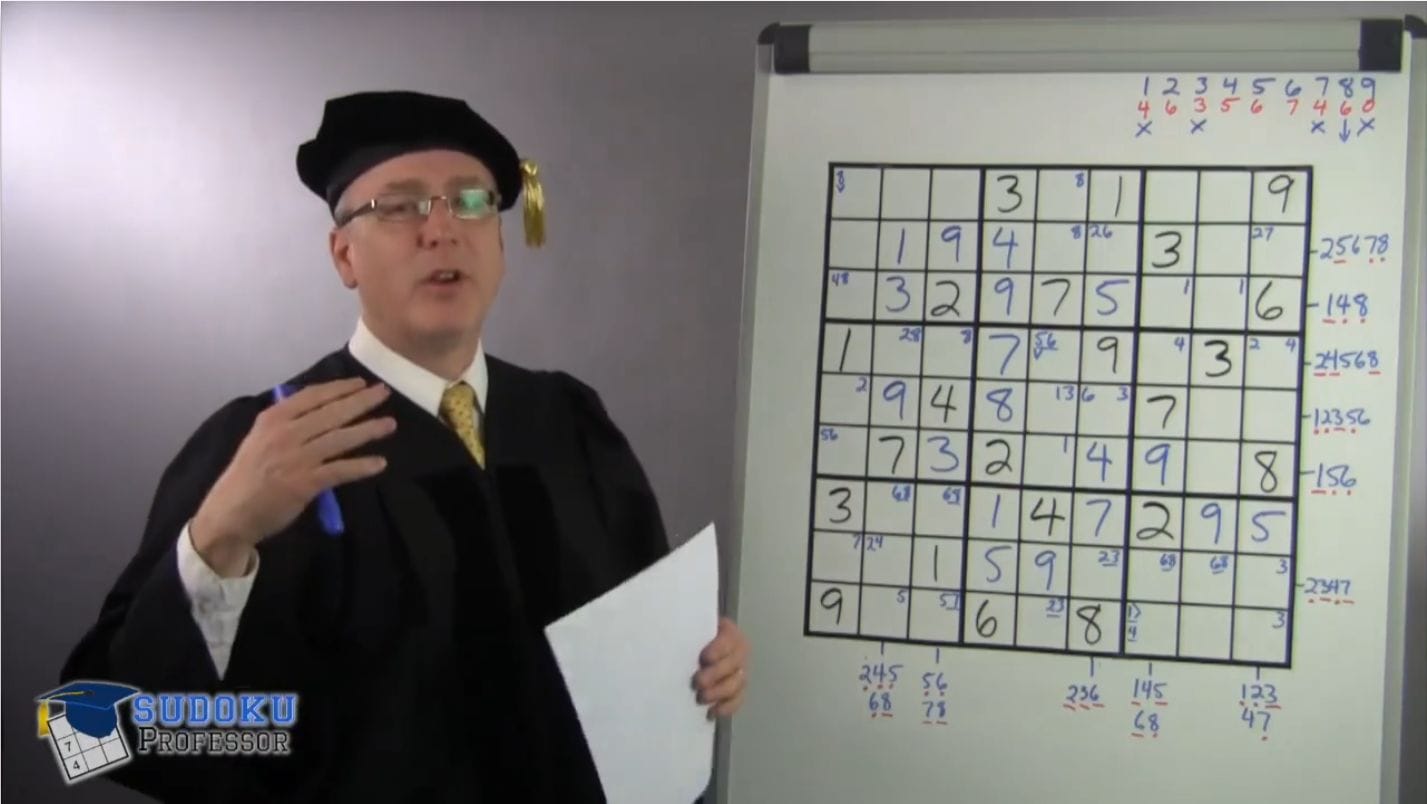
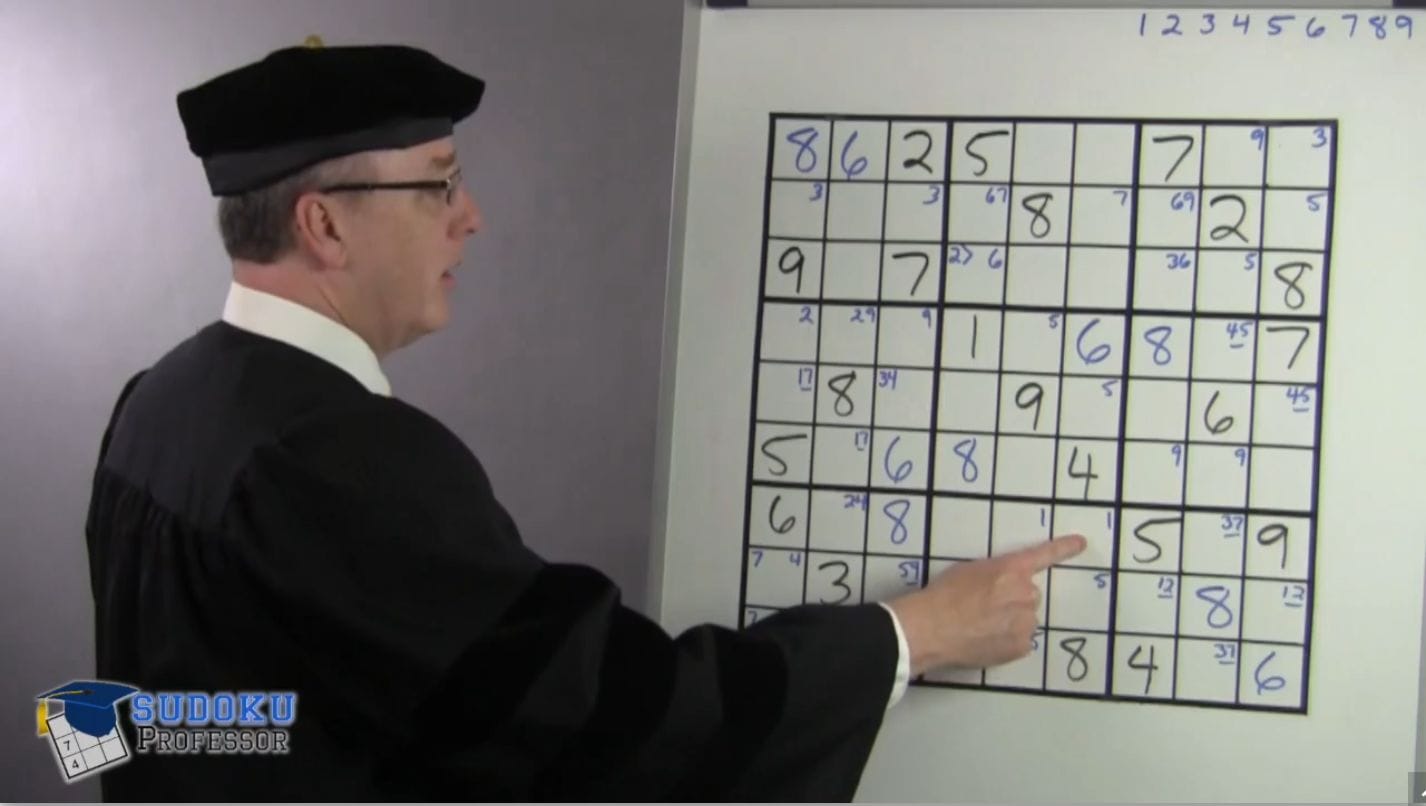
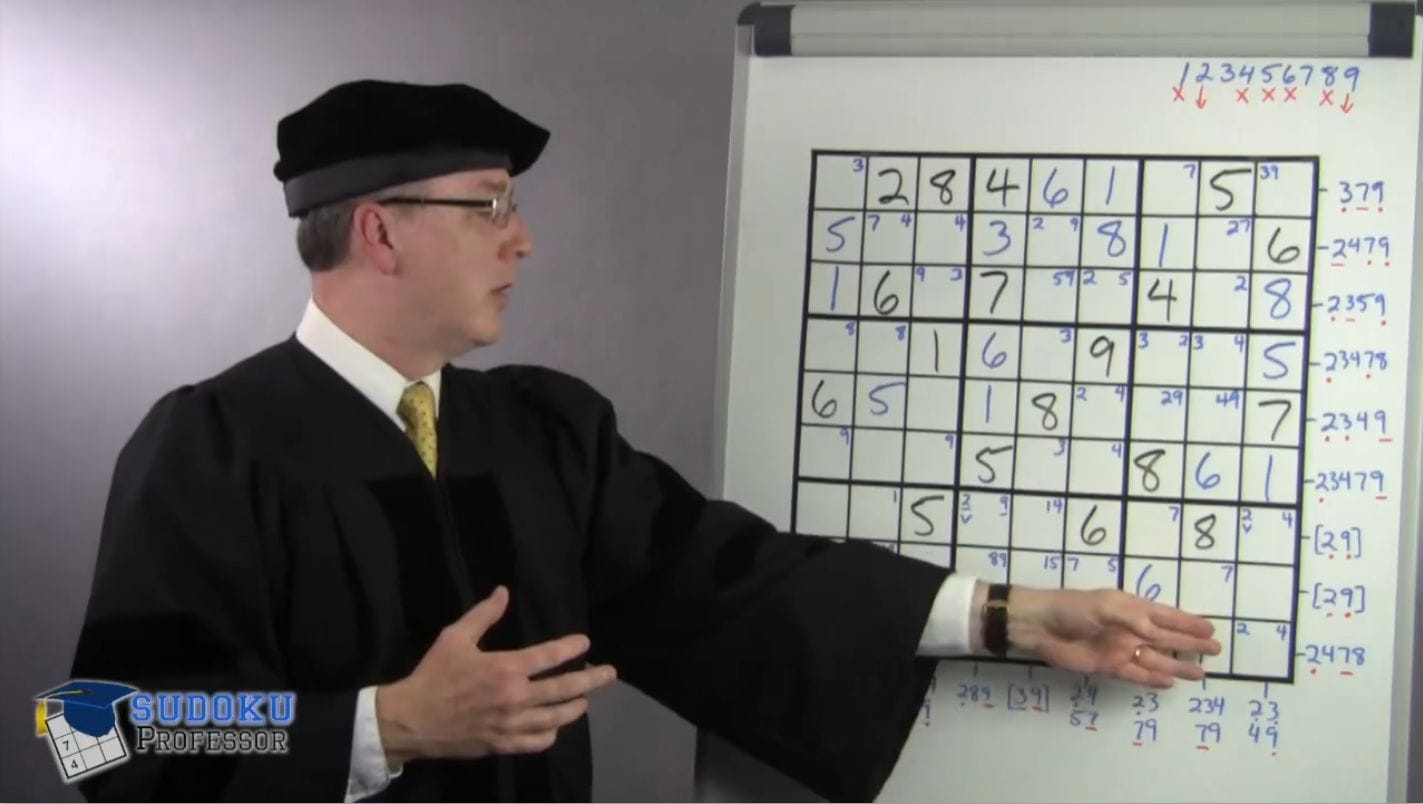
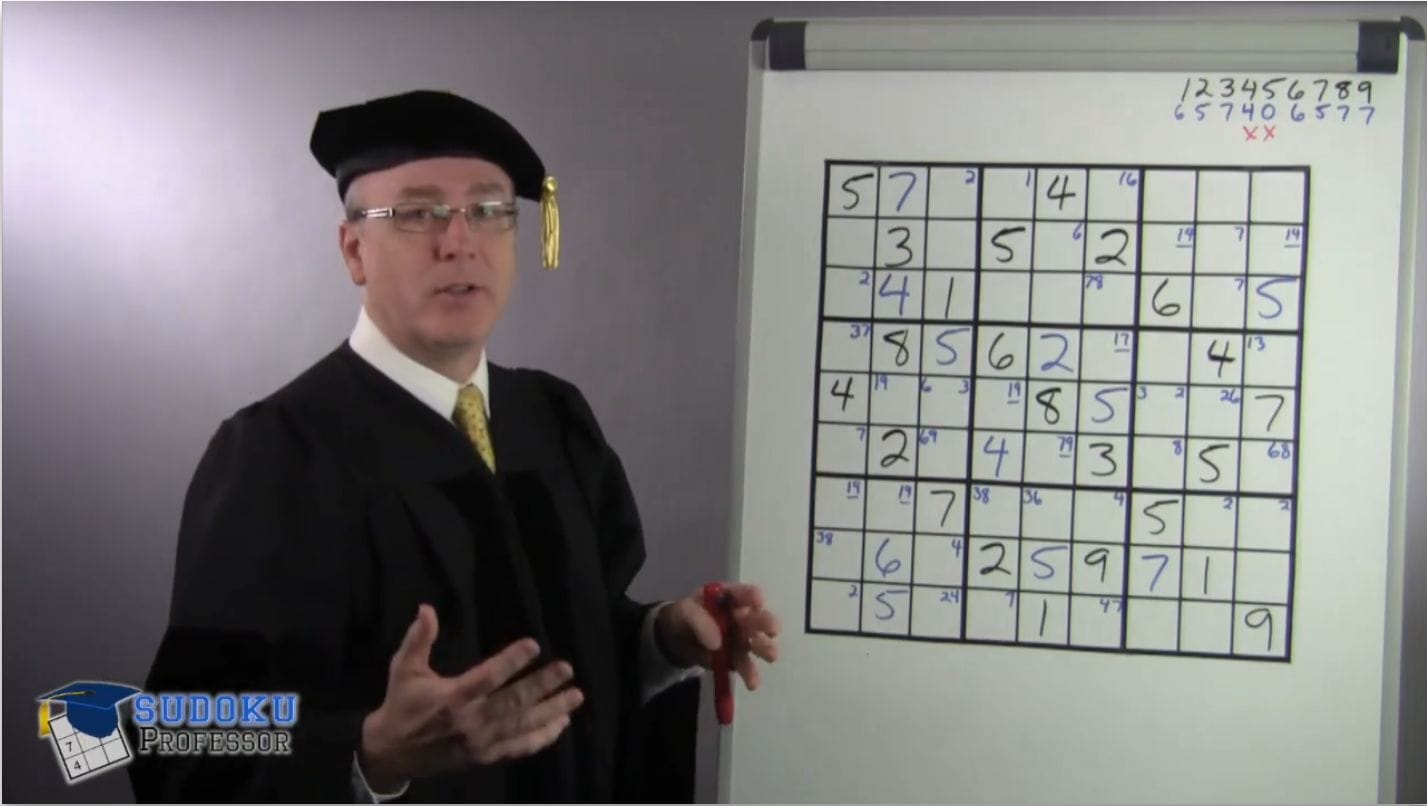
Swordfish Series

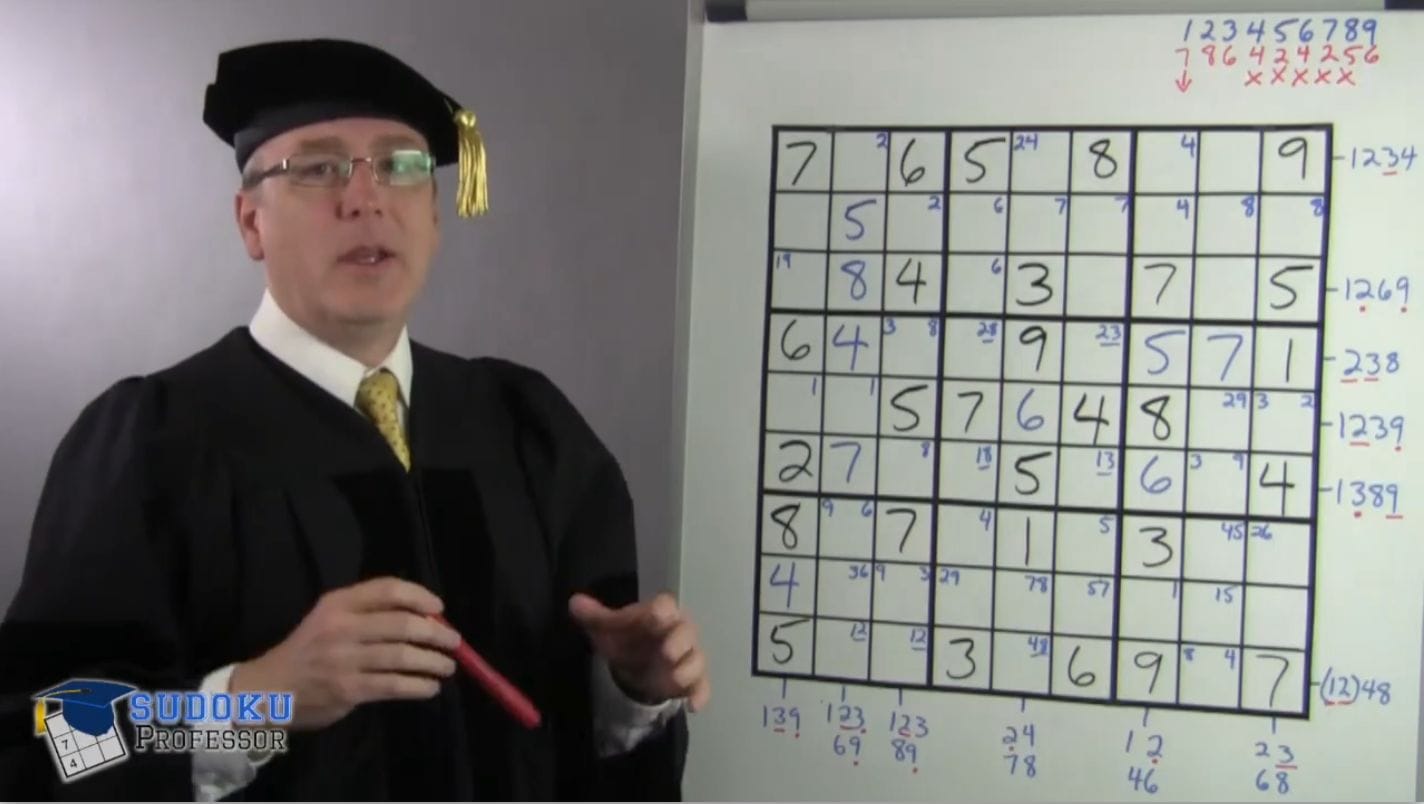
Doctorate 611: 8 (& 9) Point “Spread” Swordfish
- Swordfish! Let's get started here with an deep dive into the pattern and logic of Swordfish. Then you learn how to find it and solve your first Swordfish puzzle!

Doctorate 612: 8-Point “Compact” Swordfish
- Finding a Swordfish depends on knowing what to look for. Here I show you a particular pattern that will enable you to find certain Swordfish much more easily and quickly. Here's you'll learn what I mean by "Compact" Swordfish.

Doctorate 613: 7-Point Swordfish
- So a 7-Point Swordfish is only a slight variation on the 8-Point Swordfish. But, personally, I had a hard time with the proof logic. So I'm breaking this version of Swordfish out to explain that.

Doctorate 614: 6-Point Swordfish
- The 6-Point version has some unique aspects that warrant special mention. The numbers already filled in and their positions on the puzzle can give us clues about which ones might have 6-point pattern. Also in many of these you'll see how the pencil marks give you more clues.
-
Doctorate 615: 10+ Point Swordfish
- Let's move on to "Jellyfish"! But we don't want too many silly names flying around here, so I'll just call it a Swordfish. This pattern is definitely more difficult to find, so I'll show you my preferred method of trying to see if the pattern lines up in rows and columns.

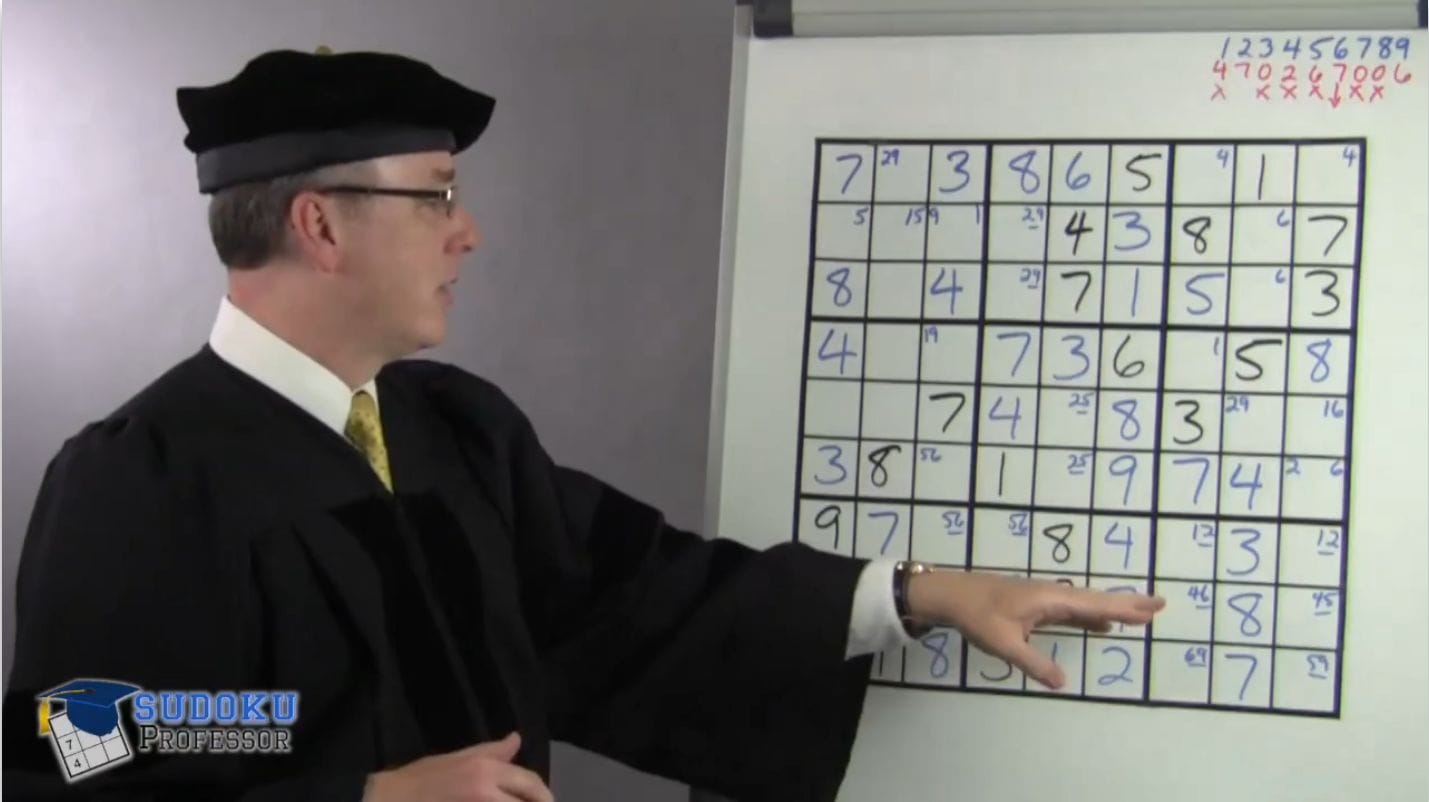
Doctorate 616: Interesting Swordfish Puzzle Exercises
- How about some more practice? I selected these puzzles because the present some interesting and unusual Swordfish patterns. And they give you more practice finding the Swordfish. And as an added bonus, they all have interesting starting patterns.
-
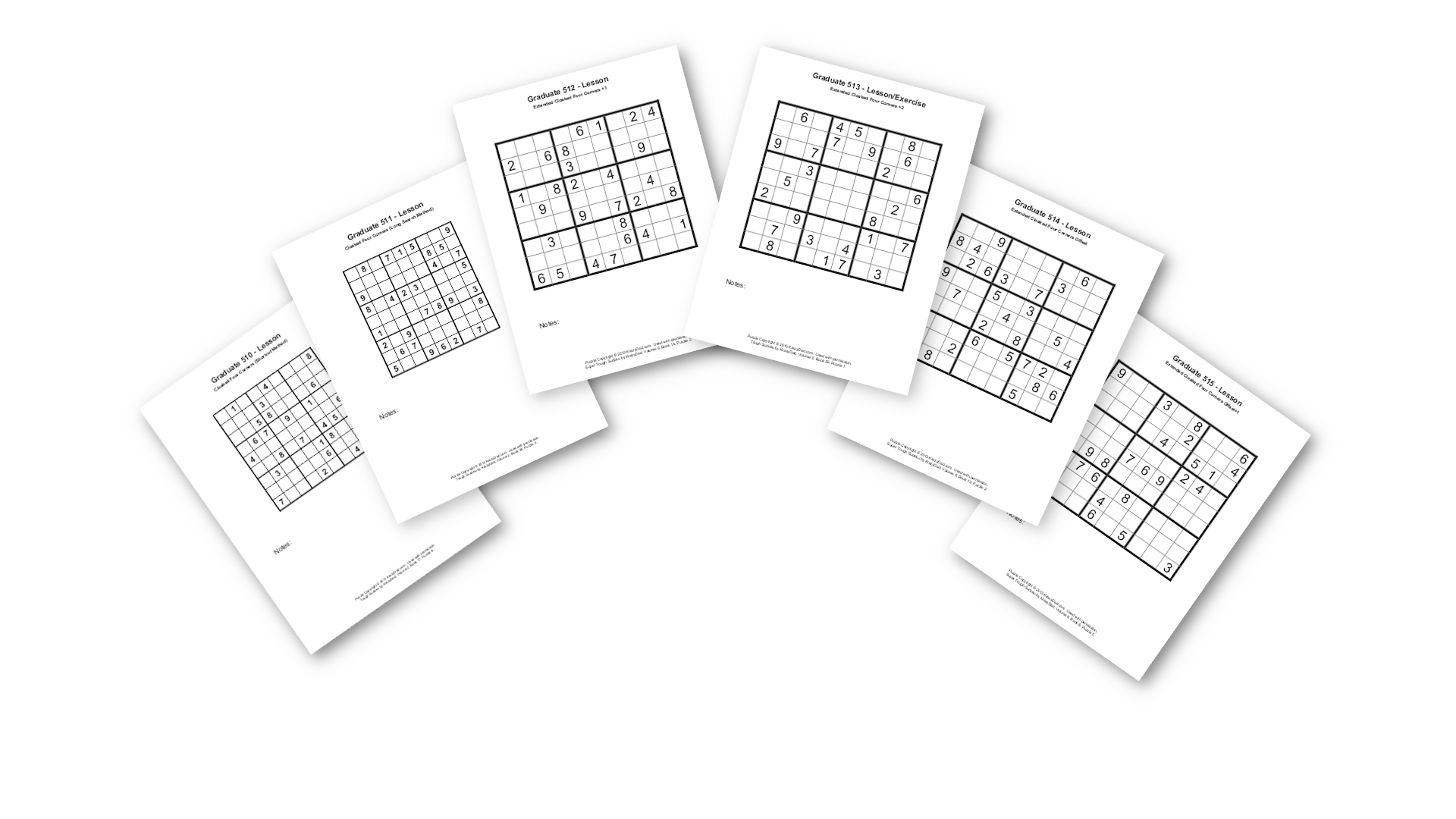
Plus! Six Doctorate 610 Series Lesson Puzzles
- Download, print, and solve!
- Easy-to-read big numbers!
- Follow along with the Professor and see results!
Learn Clever Ways to Make Puzzle-Solving Eliminations in the
NEW 2-Corners Series
-
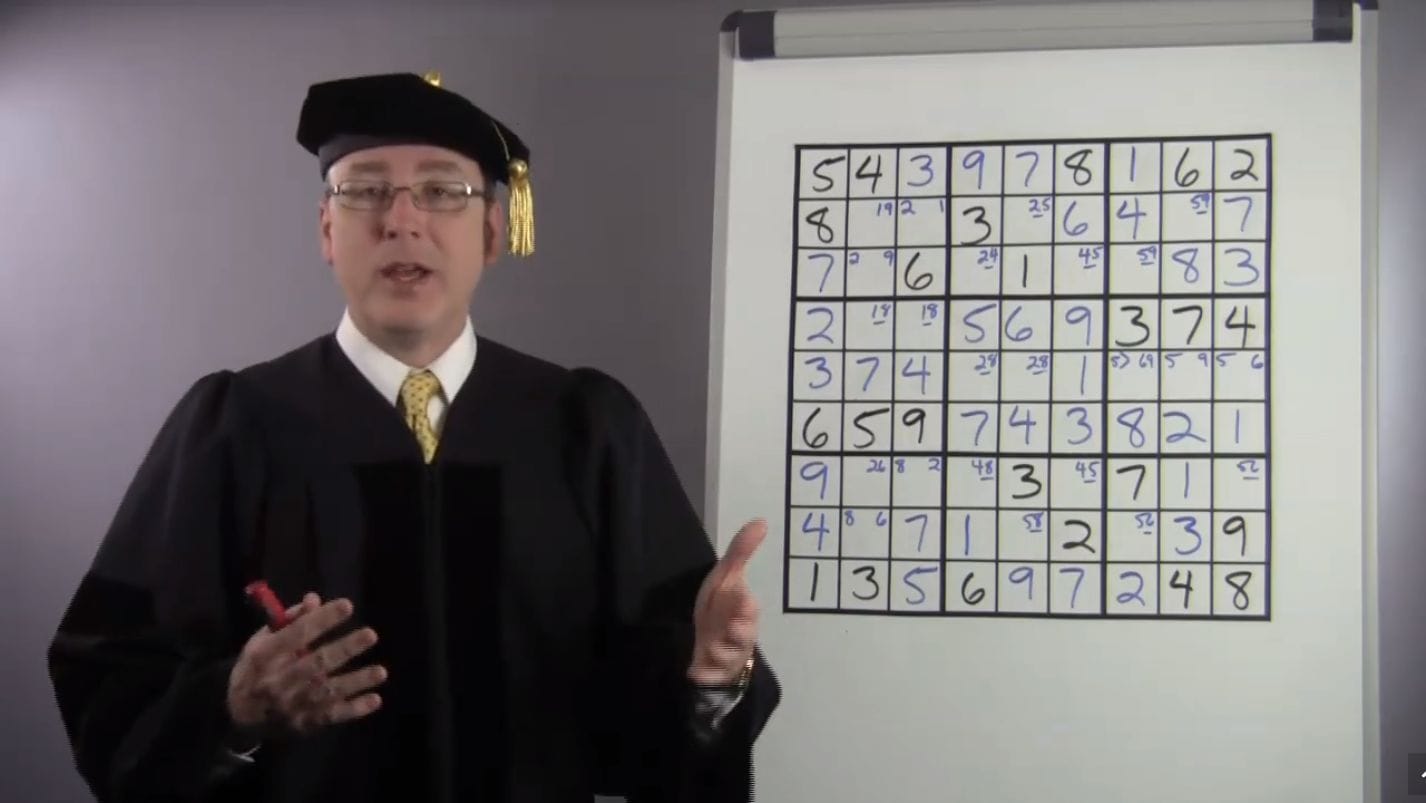
Doctorate 621: Inline Box Elimination
- I found that this variation of the 2-Corners is the easiest to see. All the action in a single "band" of three boxes, either horizontal or vertical.
-
Doctorate 622 – Spread Box Elimination
- In this variation of the 2-Corners, we're still going to be eliminating all of a number within a box, the only difference is the location of the 2-Corners in relation to the box itself.

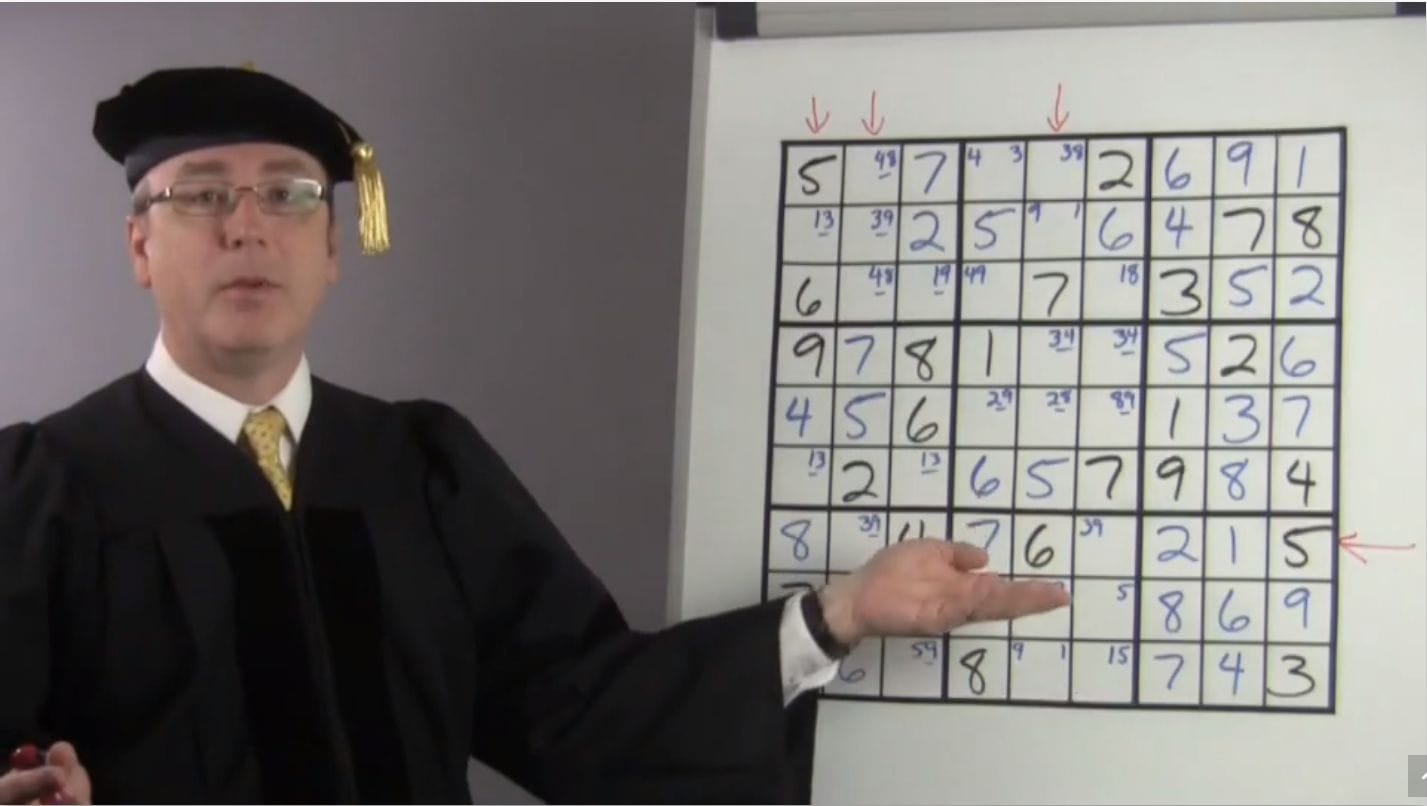
Doctorate 623: Row or Column Elimination
- Learn to link cross-box double-doubles with in-box double-doubles to create the elimination.

Doctorate 624: Row or Column Elimination with a Twist
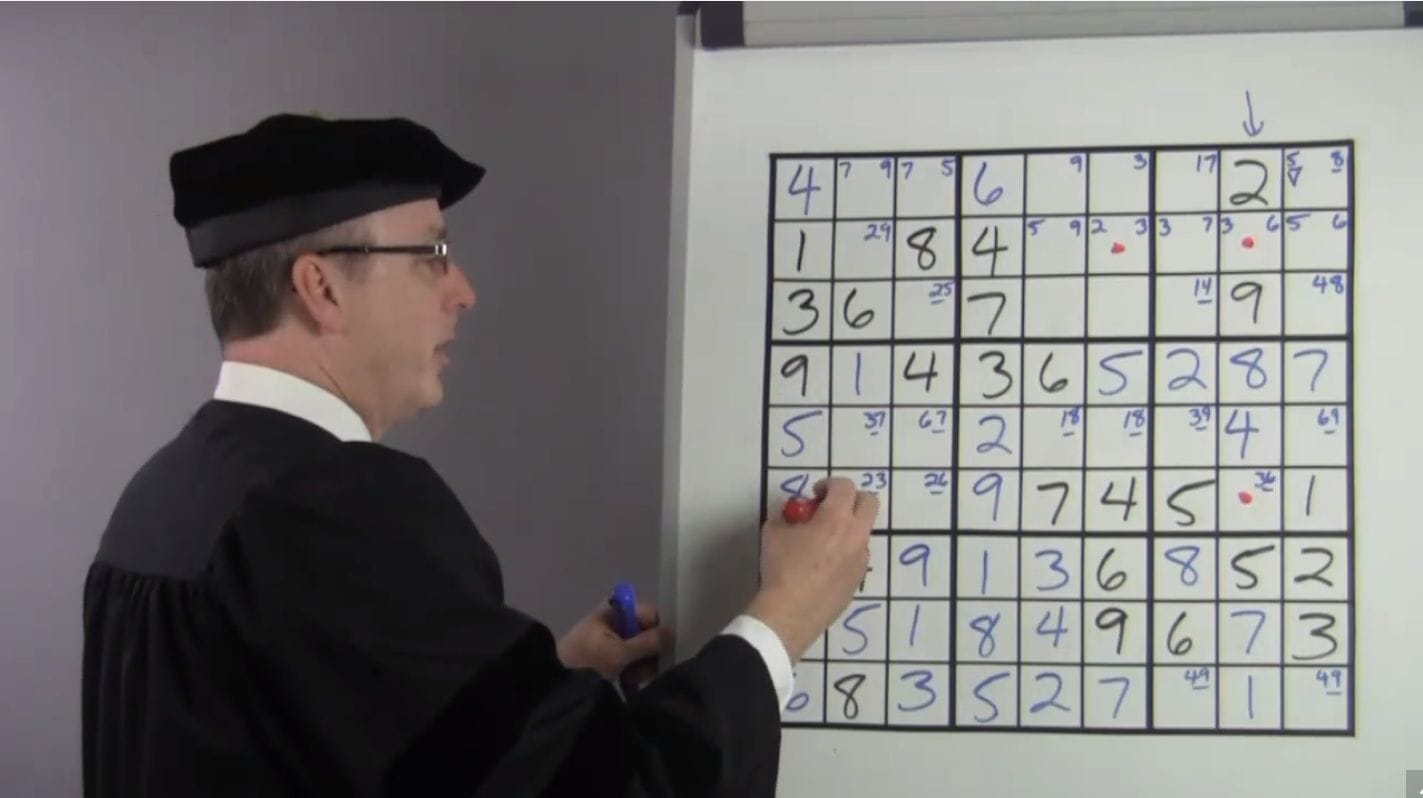
- Now we ramp this up a bit, and look for these 2-Corner eliminations on rows and columns. This is where Brian's tracing method really shines. As a matter of fact, I found this variation of 2-Corners very difficult to find without the tracing method.
-
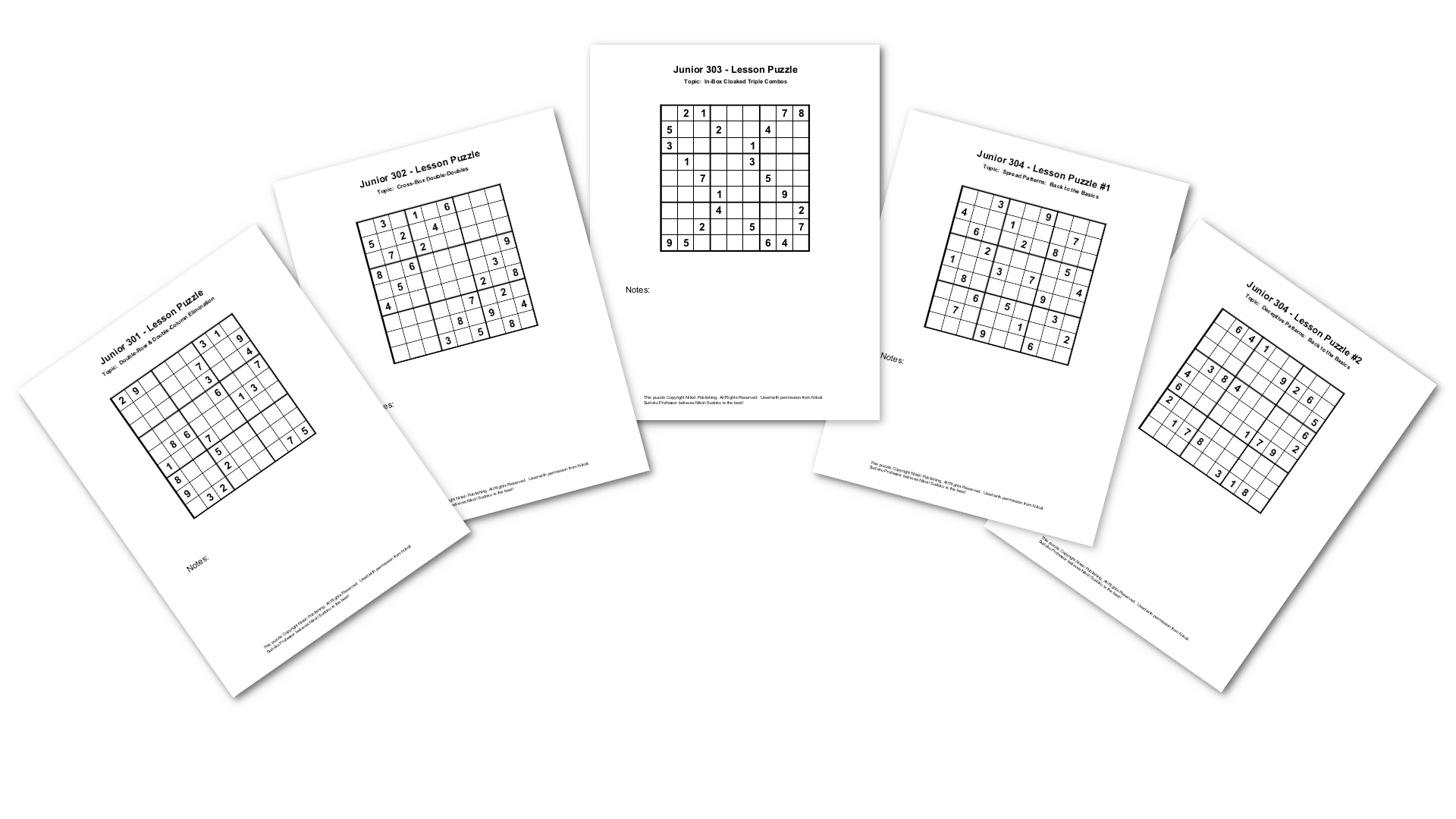
Plus! Four Doctorate 620 Series Lesson Puzzles
- Download, print, and solve!
- Easy-to-read big numbers!
- Follow along with the Professor and see results!
Take Your Sudoku Game to the Next Level!
Learn these Amazing Techniques from the
Conflict & Coalesce Series

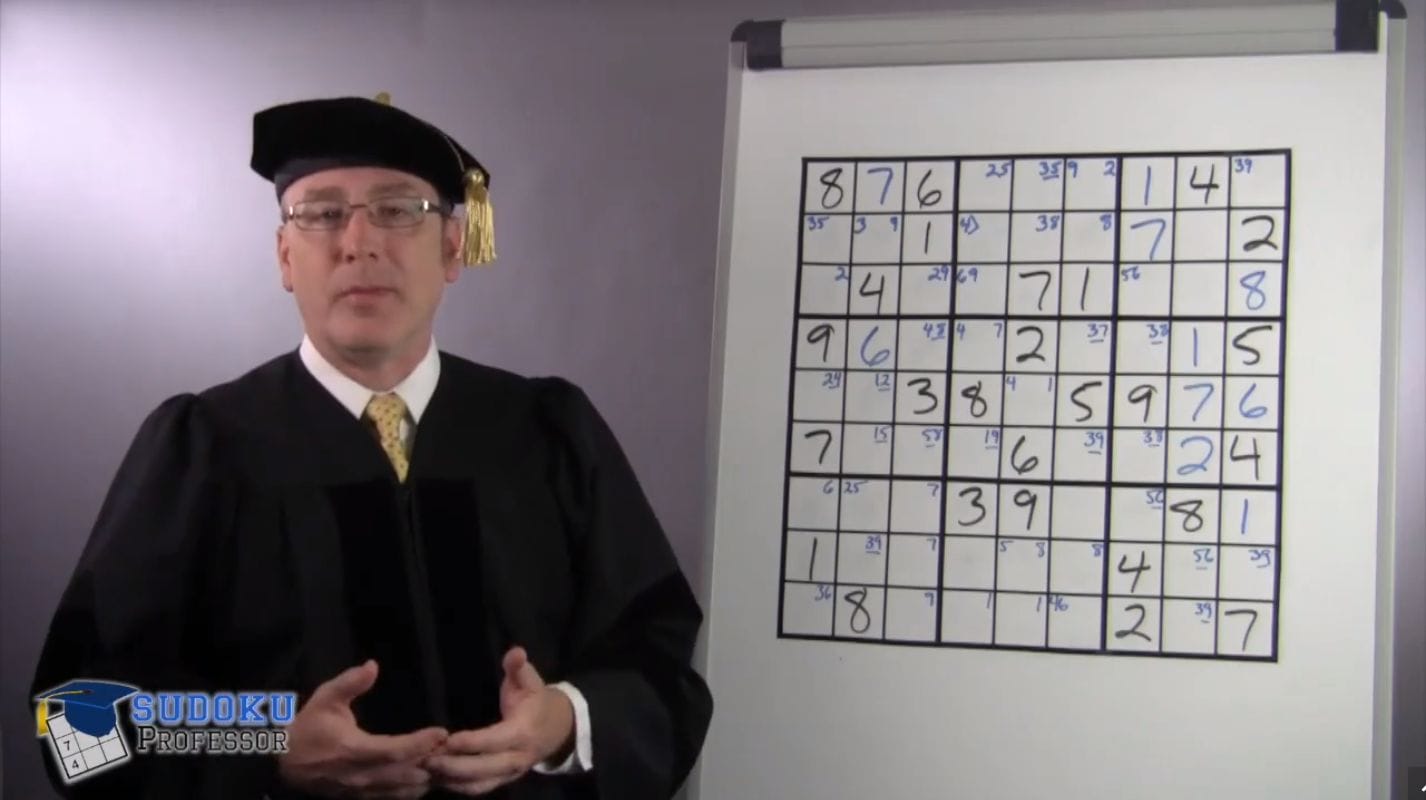
Doctorate 701: Basic Conflict
- This lesson and the accompanying exercises cover the Conflict technique. The conflict looks into the future to find a problem, then comes back to the present and avoids it to solve the puzzle.
-
Doctorate 702: Second Path Conflict
- Since we start at point that has two logic paths, we have a 50/50 chance of picking a path that will result in a conflict (assuming we find a conflict along either path). In this lesson and the following examples, I'll show you how we pencil mark that.

Doctorate 703: Coalesce
- Here I show you the Coalesce Technique. In this technique we follow two paths of logic, but instead of finding a conflict we find another space where the two paths coalesce into a single result. We then use that result to proceed.
-
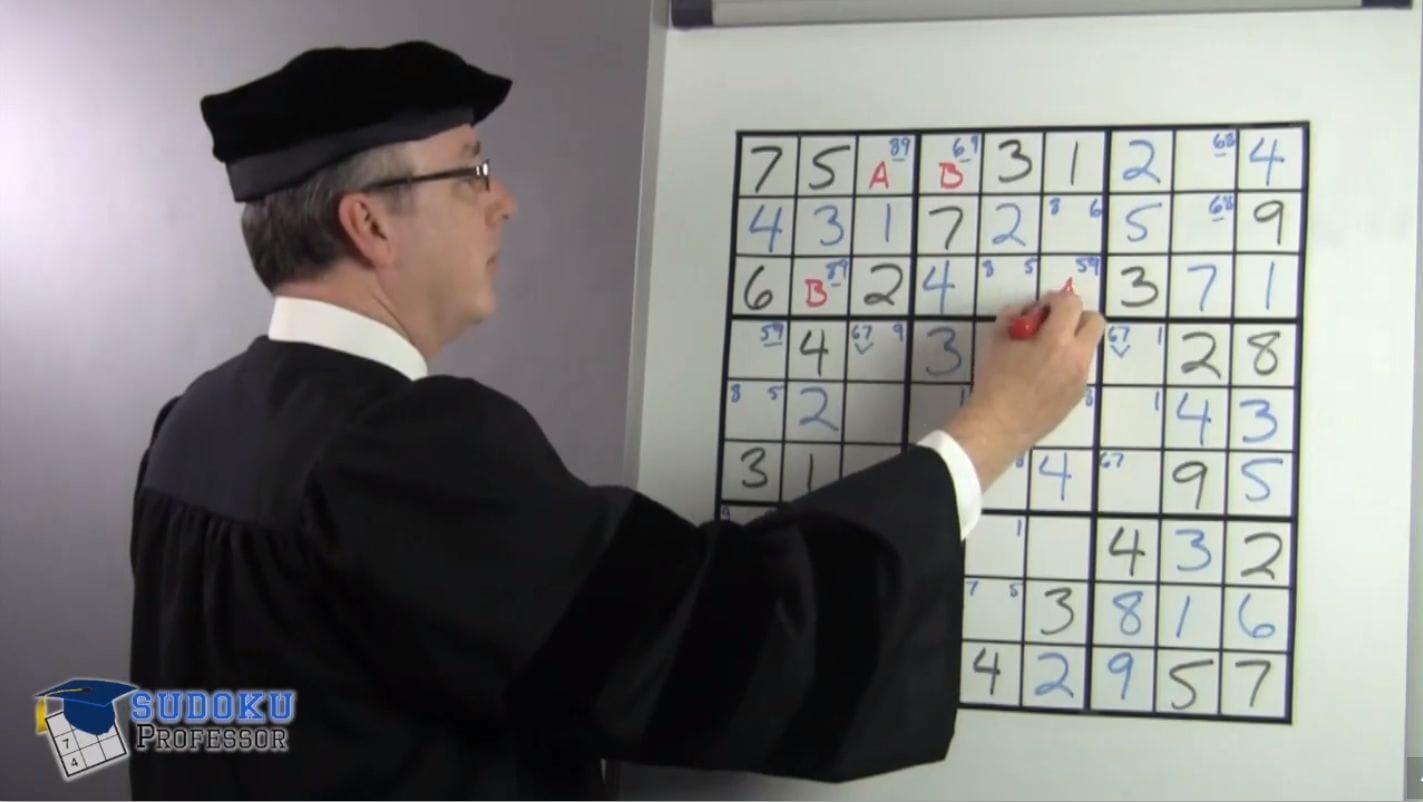
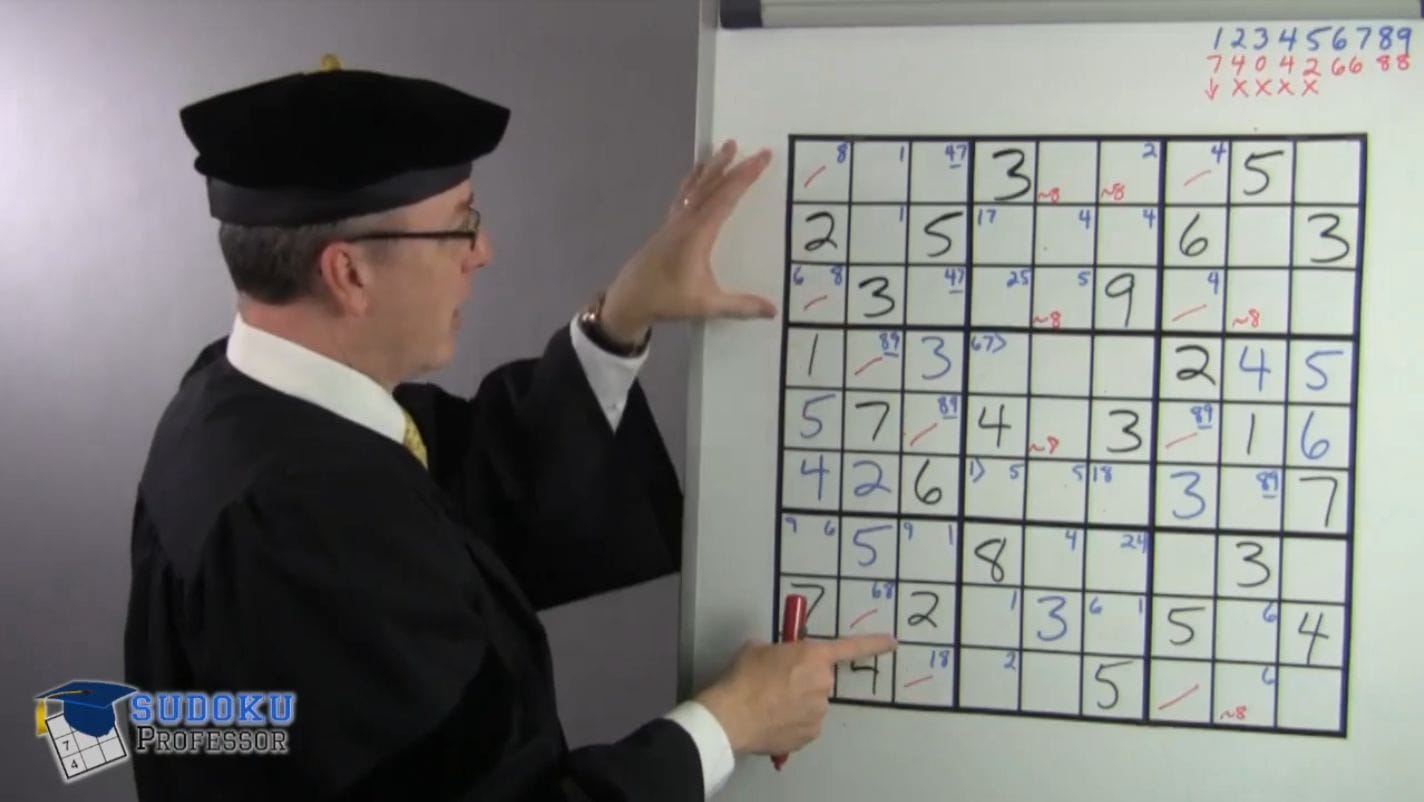
Doctorate 704: C&C Special Situations
- This series of 4 lessons covers special situations I've found while applying the Conflict and/or Coalesce techniques. You'll see two sequential coalesces, a simultaneous conflict and coalesce, a quad-double four corners, and conflict with a unique potential deadlock.
-
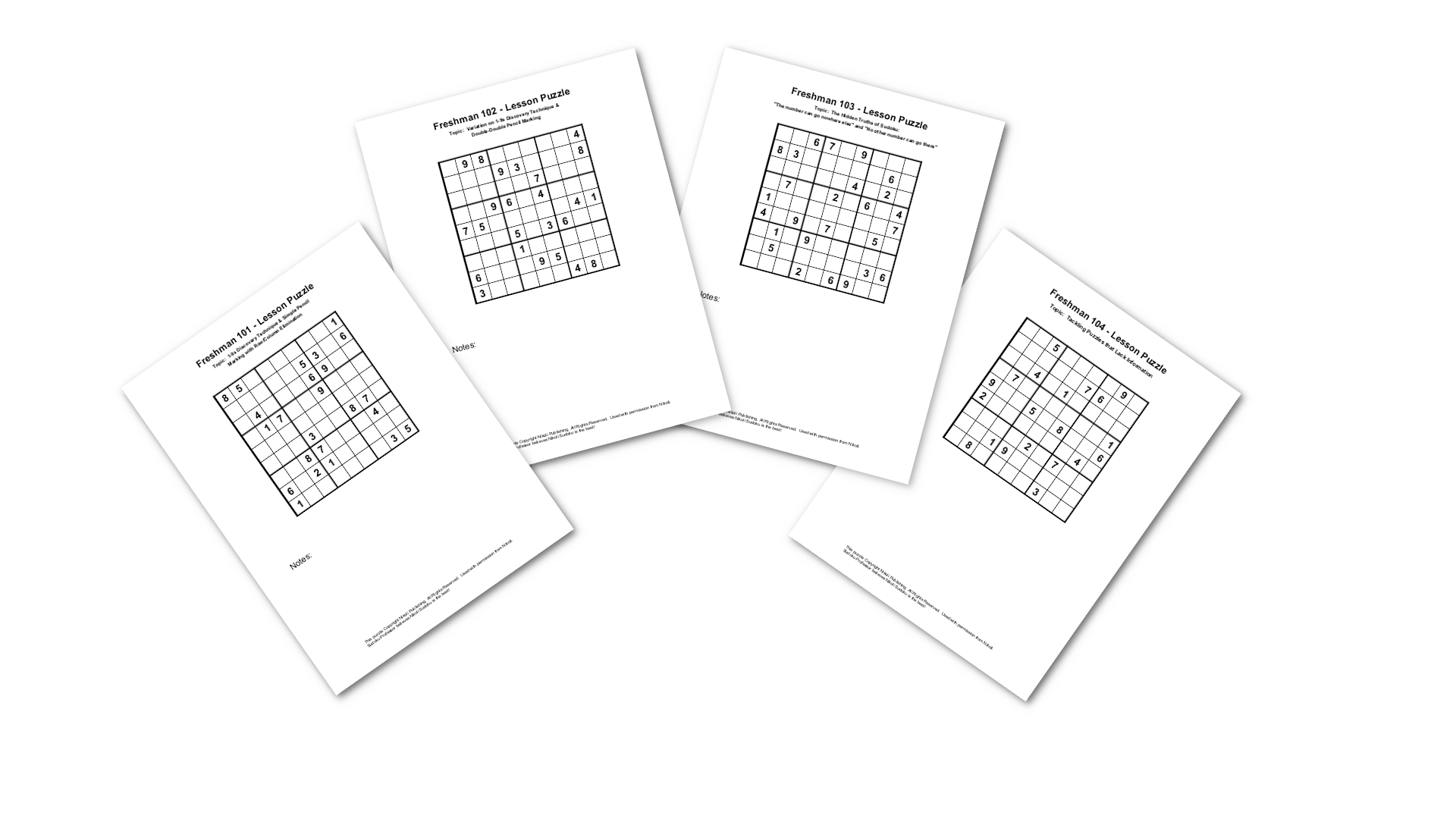
Plus! Four Doctorate 700 Series Lesson Puzzles
- Download, print, and solve!
- Easy-to-read big numbers!
- Follow along with the Professor and see results!
Solve Harder Sudoku Than You Thought Possible!
Get Unstuck and Solve Tough Puzzles Faster with the
C&C Shortcut Techniques Series
-
Doctorate 711: “No Can Go”
- With the "No Can Go" technique, we are trying to create a situation where we eliminate all possible numbers from a given space. When we do that we'll create a conflict, and we'll know how to avoid the conflict to solve the puzzle.

Doctorate 712: “Two Must Go”
- For the "Two Must Go" technique, we are trying to create a situation where we force two numbers to go into a single space. When we find that problem, we can avoid it.

Doctorate 713: “Only One Go”
- "Only One Go" is our only "coalesce"-type technique. No matter what goes in our Trigger space, the same thing always goes in our Target.
-
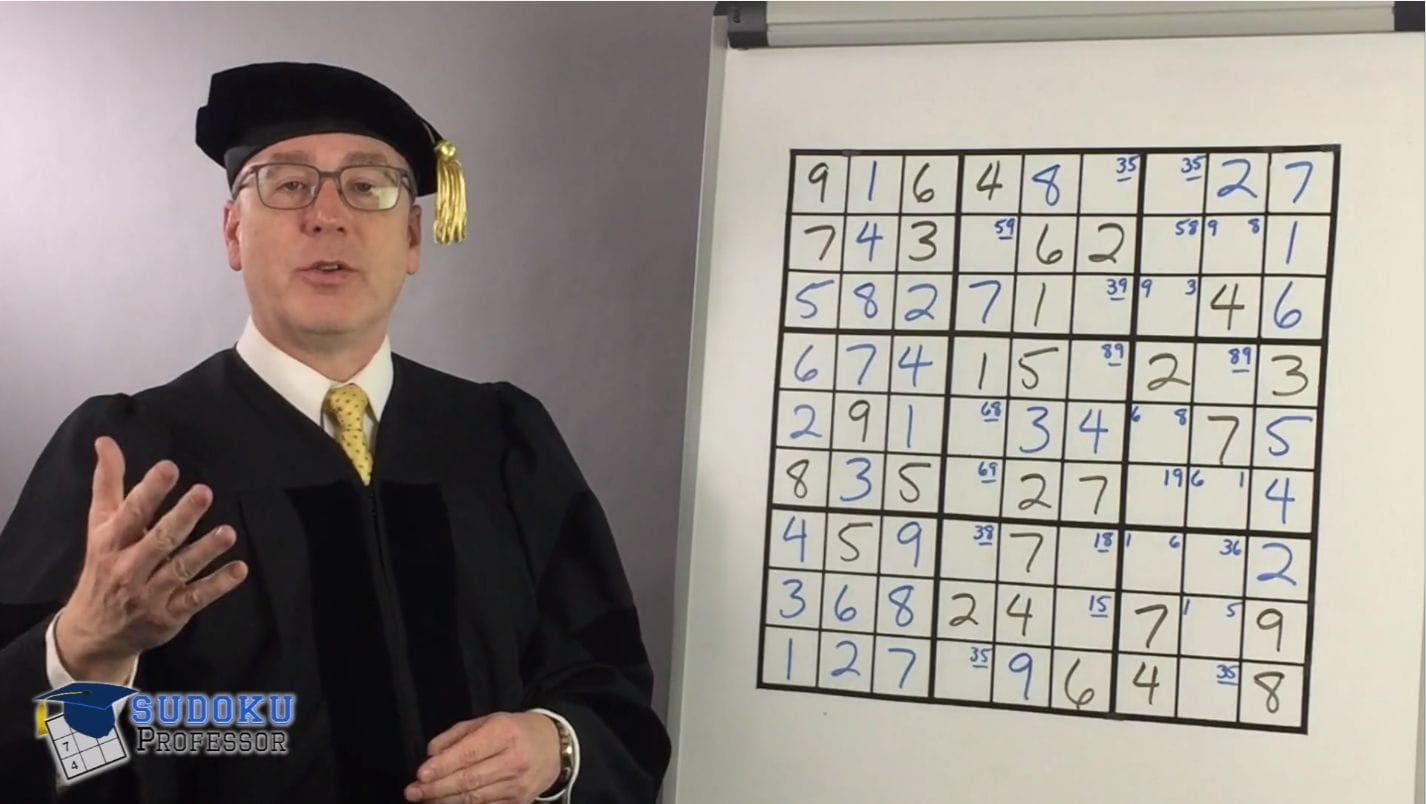
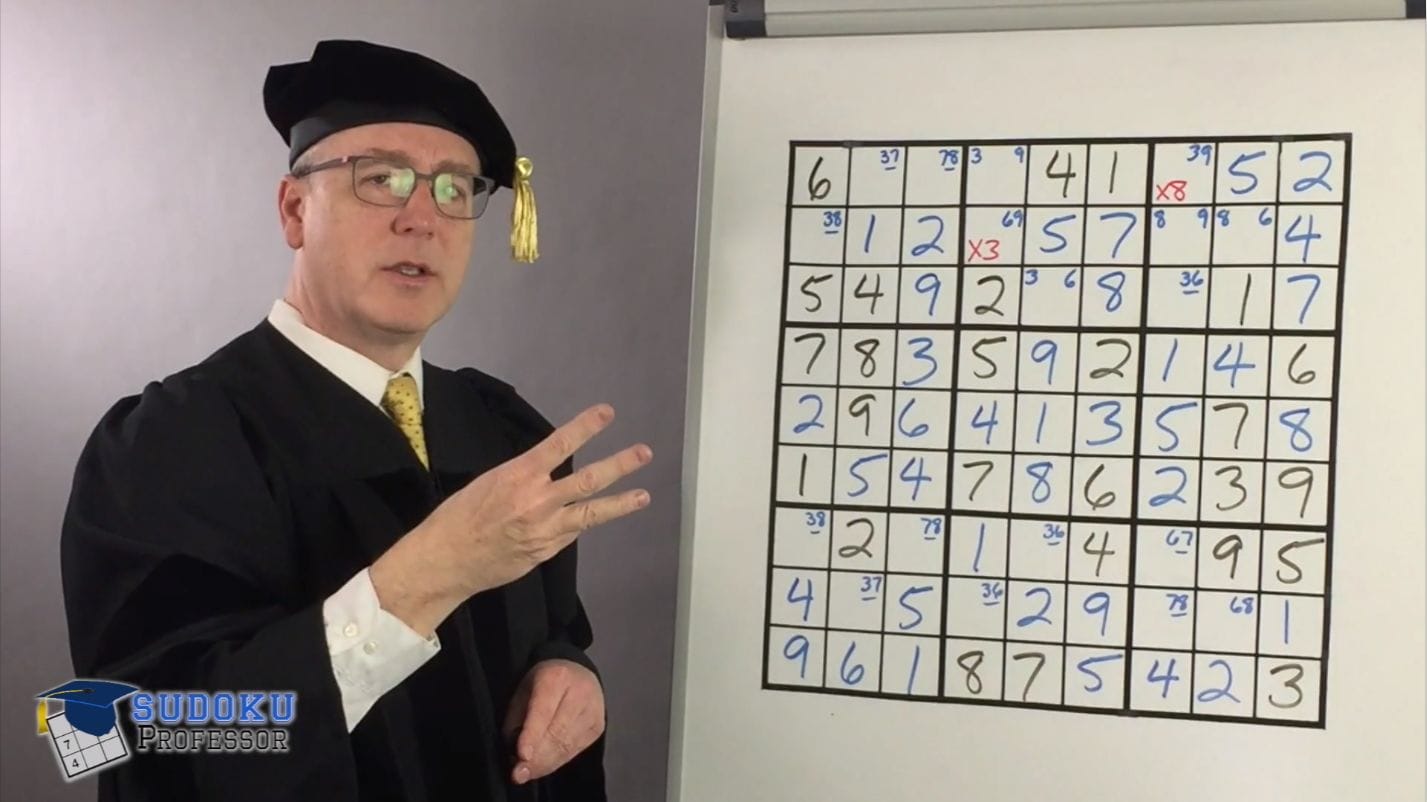
Doctorate 714: “Box Elimination”
- "Box Elimination" is another conflict technique where we're trying to create a situation where we eliminate all of a particular number from a 3-by-3 box. Unlike the other techniques where we're targeting spaces, this technique targets an entire box.
-
Plus! Four Doctorate 710 Series Lesson Puzzles
- Download, print, and solve!
- Easy-to-read big numbers!
- Follow along with the Professor and see results!
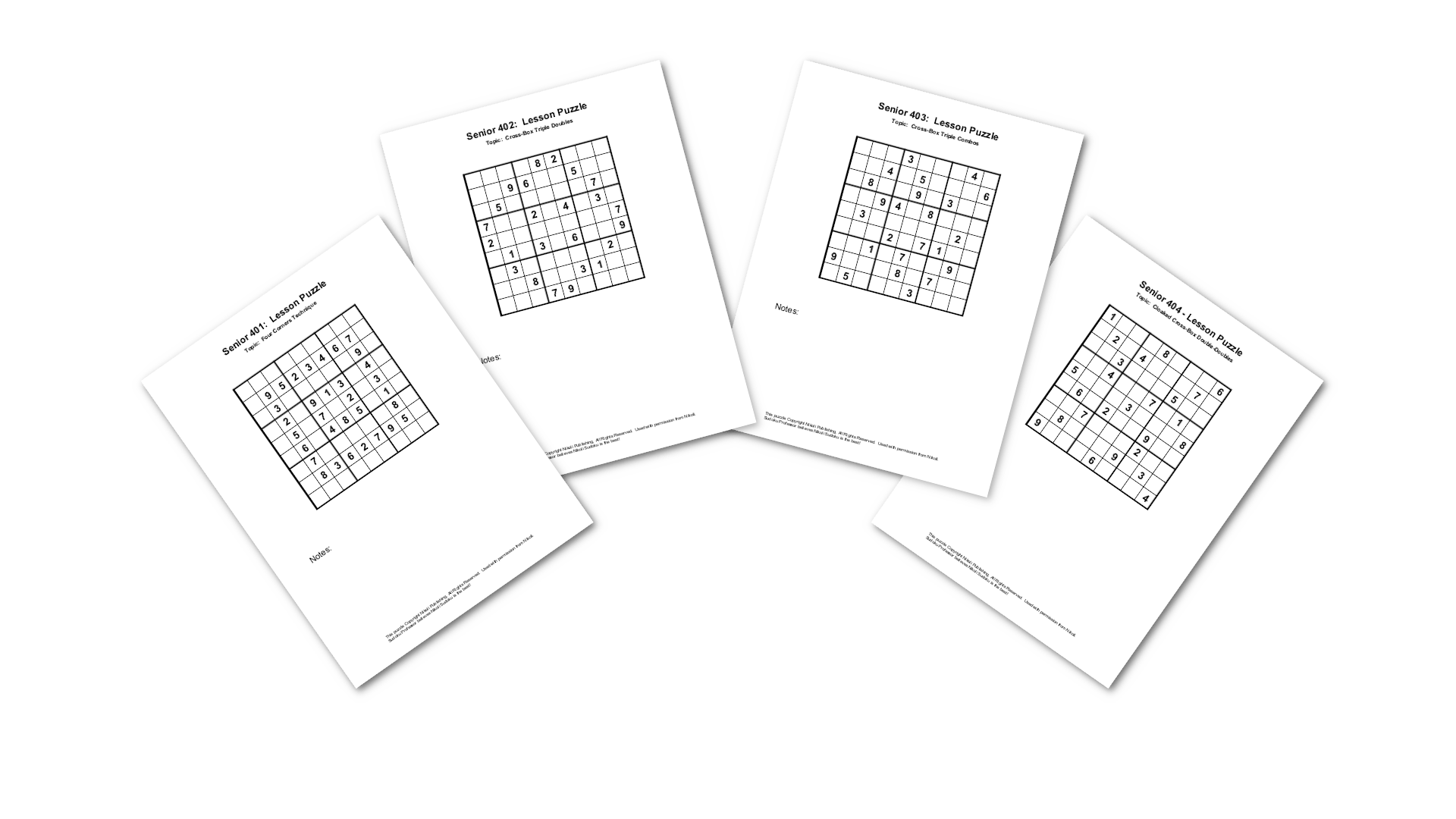

Easy Navigation
Easily move from one module to the next. Find the topic you're looking for. Point and click simplicity.
-
Works with Any Device
Whether desktop, laptop, tablet or phone... Whether Mac, PC or whatever, the learning center works with it all.

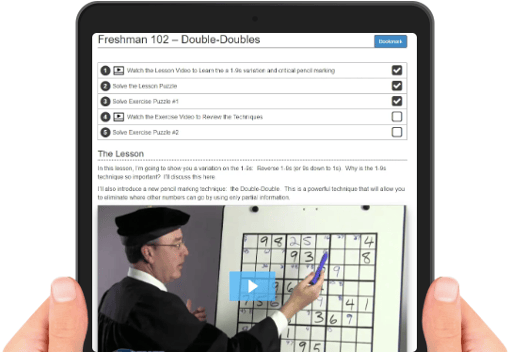
But Wait! There's More!
You'll also receive MORE Puzzles
AND Handheld Video Walk-throughs!
-
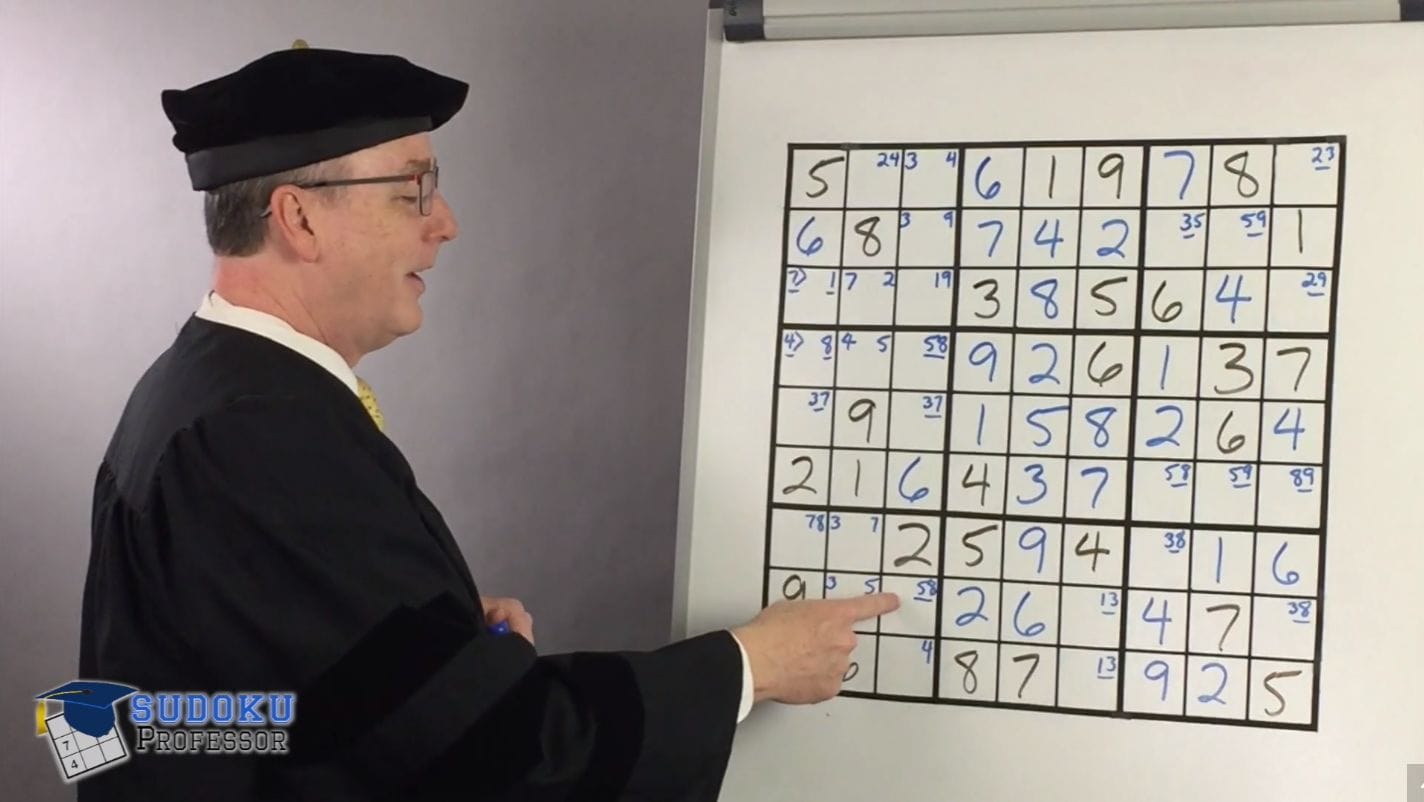
Follow Along and Cement Your Knowledge
-
Download, Print, and Solve!
-
Plus! 13 EXTRA Puzzles to Better Your Solving!
- In addition to the 55 Puzzle Walk-Throughs, practice your new skills by taking on 5 more precisely crafted downloadable, printable puzzles on your own!
- Get the Master's Course today to start digging into these great puzzles!
Still Not Convinced This is the Absolute Best
Sudoku Training for YOU?
Don't Take My Word for It....
Here's what others just like you have to say...
Please Note: All testimonials have been provided without compensation of any kind.
Impress Your Friends and Family with Your New Logic Skills!

The Professor's Super Simple
60-Day Money Back Guarantee
If for any reason you’re not completely satisfied with the quality of these lessons, we’ll refund your purchase price within 60-days from the date of purchase. It’s as simple as sending us an e-mail.
